The Word is Murder
Anthony Horowitz
Mystery
A well-written and devious book by one of the few true mystery writers active today. There's a clever blending of fact and fiction that extends even into the acknowledgements. I didn't enjoy it quite as much as I did Magpie Murders--there's no nostalgia angle to speak of--but it's no less expertly crafted. If you're a mystery aficionado, this is a must-read; if you're not, suffice it to say that it's a nifty puzzle with lively characterization and good pacing. The only knock on it that I have is . . . well, shoot, I can't tell you without spoiling the plot. Read this after you're done with The Word is Murder and you'll see what I mean. (It's a mild case, fortunately.)
My well-known decorum and modesty prevent me from capitalizing on the fact, but Anthony Horowitz are professional colleagues. I've published a Sherlock Holmes pastiche, and so has he. Other than the fact that he's a well-known author and screenwriter with a bunch of awards and multiple successful series, as well as being an Officer of the British Empire, there's not much to choose between us. Tell him to drop me a line, if you happen to run into him.
Showing posts with label 2016. Show all posts
Showing posts with label 2016. Show all posts
Sunday, July 22, 2018

Sunday, September 17, 2017
Book Review: A Death by Any Other Name
A Death by Any Other Name
Tessa Arlen
Mystery
I sometimes feel as though I ought to give new authors a chance, and not just stick to my old favorites. In this case, I was swayed by the back-cover quote: "pitch-perfect classic whodunit."
I should have remembered the rules.
A Death by Any Other Name is just plain badly written. It's not entirely Tessa Arlen's fault; there are a lot of problems that would have been caught by any competent copy editor. Consider:
At this point,one of my regular readers is already mouthing the question: "So why did you keep reading it, then?" The answer is that I still hoped that A Death by Any Other Name might prove to be interesting as a whodunit--that is, as a puzzle, a technical challenge, an ingenious piece of misdirection. Alas, I was disappointed in this as well. The whole of the deductive process displayed boils down to this (SPOILER, if anyone cares):
I'm not happy to have to pan this book. It's the kind of thing I'd like to like, and the publisher is one I'd like to support. But the author didn't do her job, and the editor didn't do theirs.
My usual suspects for whodunits are Steve Hockensmith, Aaron and Charlotte Elkins, and sometimes Anthony Horowitz. If you find any others, let me know.
Tessa Arlen
Mystery
I sometimes feel as though I ought to give new authors a chance, and not just stick to my old favorites. In this case, I was swayed by the back-cover quote: "pitch-perfect classic whodunit."
I should have remembered the rules.
A Death by Any Other Name is just plain badly written. It's not entirely Tessa Arlen's fault; there are a lot of problems that would have been caught by any competent copy editor. Consider:
- "Fraulein" is several times misspelled as "Frauline."
- A chafing dish is used to warm food. A chaffing dish, if there were such a thing, would have to either convert food to inedible husks, mock it in a good-natured fashion, or confuse its radar.
- One character--an educated man--says that France has been England's foe "since time in memoriam". The phrase Arlen is looking for is "since time immemorial."
- Only other servants would have referred to the butler as "Mr. Evans." The family and guests would have called him "Evans."
She brought refinement to the dishes she prepared that far outshone anything I have had from French chefs in more prestigious establishments.Try saying that out loud and sounding natural. There are plenty of other solecisms as well--run-on sentences, misused commas, paragraphs that have unattributed dialog from two different characters, and an implacable devotion to telling what the characters are feeling rather than showing. Nor does Arlen understand that the "action" of a whodunit takes the form of "information is revealed" (either to obscure or to enlighten), so the pacing is nonexistent too.
At this point,
- This piece of paper, which we found quite by accident, has a 7 written in the continental fashion, with a bar through it:
7. - X is French.
- Therefore, X is the murderer!
I'm not happy to have to pan this book. It's the kind of thing I'd like to like, and the publisher is one I'd like to support. But the author didn't do her job, and the editor didn't do theirs.
My usual suspects for whodunits are Steve Hockensmith, Aaron and Charlotte Elkins, and sometimes Anthony Horowitz. If you find any others, let me know.
Saturday, December 31, 2016
Holiday Bliss


Happy New Year to my
Friday, December 30, 2016
Book Review: The Grid
The Grid: The Fraying Wires Between Americans and Our Energy Future
Gretchen Bakke
Engineering
This is a really interesting book about a hugely important and largely invisible subject. It's full of ideas that should make you stop and think. A trivial example: pretty much every single watt of electrical power you are using right now--battery power excepted--was something else a fraction of a second ago. It was a lump of coal or a gas flame or a gust of wind. Electricity, unlike (say) water, is consumed the instant it's used.
That makes the electrical grid an extraordinarily daunting piece of infrastructure. In Gretchen Bakke's argument, the grid that we have is a historical accident: centralized power production was not designed in, it just happened (for business reasons more than technical ones). More to the point, The Grid is an extend argument for rethinking the grid--specifically, for decentralizing it, for making it possible to use power near where it's generated, and for making the whole thing much more resilient.
The argument seems to me to be a good one. Some of the ideas in here are really clever. (That Tesla roadster isn't just a vehicle; it's a battery, meaning it can be used to store energy that's generated during the 90% of its life when you're not driving it.) How well some of these notions will work in practice is a harder question, and how to get there is harder still. At minimum, some people need to think very very hard about incentives--there are far too many horror stories about perverse incentives in The Grid--and probably come up with some kind of massive multiplayer simulation.
The Grid isn't for anyone who thinks engineering and engineering policy are intrinsically boring. Other than that, I'd recommend it widely. It's well written, it's not too technical . . . and it's important.
Gretchen Bakke
Engineering
This is a really interesting book about a hugely important and largely invisible subject. It's full of ideas that should make you stop and think. A trivial example: pretty much every single watt of electrical power you are using right now--battery power excepted--was something else a fraction of a second ago. It was a lump of coal or a gas flame or a gust of wind. Electricity, unlike (say) water, is consumed the instant it's used.
That makes the electrical grid an extraordinarily daunting piece of infrastructure. In Gretchen Bakke's argument, the grid that we have is a historical accident: centralized power production was not designed in, it just happened (for business reasons more than technical ones). More to the point, The Grid is an extend argument for rethinking the grid--specifically, for decentralizing it, for making it possible to use power near where it's generated, and for making the whole thing much more resilient.
The argument seems to me to be a good one. Some of the ideas in here are really clever. (That Tesla roadster isn't just a vehicle; it's a battery, meaning it can be used to store energy that's generated during the 90% of its life when you're not driving it.) How well some of these notions will work in practice is a harder question, and how to get there is harder still. At minimum, some people need to think very very hard about incentives--there are far too many horror stories about perverse incentives in The Grid--and probably come up with some kind of massive multiplayer simulation.
The Grid isn't for anyone who thinks engineering and engineering policy are intrinsically boring. Other than that, I'd recommend it widely. It's well written, it's not too technical . . . and it's important.
Wednesday, December 28, 2016
Book Review: The Man Who Made Lists
The Man Who Made Lists: Love, Death, Madnesss, and the Creation of Roget's Thesaurus
Joshua Kendall
Biography
The Man Who Made Lists wants to be Simon Winchester's The Professor and the Madman. It isn't. It would probably settle for being Everything Explained That is Explainable. It isn't that, either. Joshua Kendall spends way too little time on the Thesaurus itself. He spends way too much time on psychoanalyzing Roget, frequently on the flimsiest of evidence. At various points he tells us not only how a conversation went, but what expressions were on people's faces or even what they were thinking. Since there are no end notes, there's no way to know on what basis (if any) Kendall makes these assertions. Buried in the end matter, however, is this:
Joshua Kendall
Biography
The Man Who Made Lists wants to be Simon Winchester's The Professor and the Madman. It isn't. It would probably settle for being Everything Explained That is Explainable. It isn't that, either. Joshua Kendall spends way too little time on the Thesaurus itself. He spends way too much time on psychoanalyzing Roget, frequently on the flimsiest of evidence. At various points he tells us not only how a conversation went, but what expressions were on people's faces or even what they were thinking. Since there are no end notes, there's no way to know on what basis (if any) Kendall makes these assertions. Buried in the end matter, however, is this:
Though all the scenes are based on actual events, in several instances, where primary source material was lacking, I offered my best approximation of specific details."Based on actual events," huh?
Saturday, December 24, 2016
Book Review: Song of the Vikings
Song of the Vikings: Snorri and the Making of Norse Myths
Nancy Marie Brown
Biography, history, mythology
When I reviewed the author's Ivory Vikings, I ended with this comment:
There are excerpts from the myths themselves, which are nicely done. There's also a good character portrait of Snorri Sturluson, "the Homer of the North"--a sobriquet which is richly deserved, as a vast chunk of what we know about Norse paganism comes from his writing. He was no neo-viking himself: fat, gouty, duplicitous, funny, learned, ambitious, and perhaps a bit greedy. That, if anything, makes him more comprehensible and more sympathetic to us.
In contrast, the weakest parts of Song of the Vikings are about what a true viking would consider important: fighting. Brown tries mightily to make sense of the dense, generations-long series of feuds and counter-feuds, raids and revenge, politics and war that characterized Iceland and Norway in the middle ages, but she doesn't pull it off. (It's a small-scale echo of the absolute spaghetti that characterized the dizzying interrelationships of the classical Greek city-states.) To be fair, putting this history into a coherent story would be hard for anyone.
Finally, any fantasy lover owes a big debt to Snorri Sturluson. Brown does a nice job tracing the later influence of the Norse Eddas, particularly regarding J. R. R. Tolkien and C. S. Lewis. To read Song of the Vikings is to catch a glimpse of the troll-haunted, giant-ridden, bleak, and beautiful world of our collective imagination. I wouldn't recommend the book to everyone, but if you're interested in the roots of fantasy literature or in Iceland or in the Norse myths it's worth checking out.
Nancy Marie Brown
Biography, history, mythology
When I reviewed the author's Ivory Vikings, I ended with this comment:
I don't know that I'd be in a rush to read another non-fiction book by Nancy Marie Brown. On the other hand, if she ever publishes any translations of those sagas, I'm there.Song of the Vikings isn't quite that, but it's the next best thing: the story of how the sagas and myths came to be written down, and the biography of the man who did the writing. It's a subject that play's to Brown's strengths (hugely evocative writing, a sense of place and time, deep knowledge, passion for the subject) and largely avoids her weaknesses (a lack of intellectual discipline).
There are excerpts from the myths themselves, which are nicely done. There's also a good character portrait of Snorri Sturluson, "the Homer of the North"--a sobriquet which is richly deserved, as a vast chunk of what we know about Norse paganism comes from his writing. He was no neo-viking himself: fat, gouty, duplicitous, funny, learned, ambitious, and perhaps a bit greedy. That, if anything, makes him more comprehensible and more sympathetic to us.
In contrast, the weakest parts of Song of the Vikings are about what a true viking would consider important: fighting. Brown tries mightily to make sense of the dense, generations-long series of feuds and counter-feuds, raids and revenge, politics and war that characterized Iceland and Norway in the middle ages, but she doesn't pull it off. (It's a small-scale echo of the absolute spaghetti that characterized the dizzying interrelationships of the classical Greek city-states.) To be fair, putting this history into a coherent story would be hard for anyone.
Finally, any fantasy lover owes a big debt to Snorri Sturluson. Brown does a nice job tracing the later influence of the Norse Eddas, particularly regarding J. R. R. Tolkien and C. S. Lewis. To read Song of the Vikings is to catch a glimpse of the troll-haunted, giant-ridden, bleak, and beautiful world of our collective imagination. I wouldn't recommend the book to everyone, but if you're interested in the roots of fantasy literature or in Iceland or in the Norse myths it's worth checking out.
Thursday, December 22, 2016
Yet More Exciting Publishing News
Go here.
Yes: my old pal B.S. is having a short story published. He's more than earned it. He's been working hard at writing stories, taking it seriously, developing his craft. I've had the privilege of being among his alpha readers from the beginning. He started out good and he's getting better.
P.S. But don't forget this.
Yes: my old pal B.S. is having a short story published. He's more than earned it. He's been working hard at writing stories, taking it seriously, developing his craft. I've had the privilege of being among his alpha readers from the beginning. He started out good and he's getting better.
P.S. But don't forget this.
Wednesday, December 21, 2016
Book Review: Blade of the Samurai
Blade of the Samurai: A Shinobi Mystery
Susan Spann
Mystery
Pretty much the same as the first book, except that Father Mateo has even less to do.
Susan Spann
Mystery
Pretty much the same as the first book, except that Father Mateo has even less to do.
Sunday, December 18, 2016
Book Review: Hero of the Empire
Hero of the Empire: The Making of Winston Churchill
Candace Millard
Biography, history
It's time for the truth to come out: Winston Churchill was, clearly, not a real person. "Churchill" was dreamed up by adventure-story writers. No doubt there was an actor hired to play the role at various points, but the fact remains that "Churchill" and his adventures just aren't credible.
Consider what we're asked to believe. The Churchill character supposedly
I'm happy to report that Hero of the Empire delivers on all fronts. It's exciting. It's action-packed. It's well-researched. It's beautifully written. If the actual events of the escape weren't exactly the stuff of fiction--no tunnels, no masquerading as the enemy, no chase scenes--they were surely thrilling enough to those who were in the middle of them, and Millard brings that to life. (Admittedly she's relying somewhat on Churchill's own memoirs, which are inclined to minimize neither the drama of the situation nor Winston's own part in it.)
There was even a genuine "Wanted: dead or alive" notice for Churchill, with a reward of £25--Churchill was already politically and symbolically important. His subsequent response was that the reward was too low.

Candace Millard
Biography, history
It's time for the truth to come out: Winston Churchill was, clearly, not a real person. "Churchill" was dreamed up by adventure-story writers. No doubt there was an actor hired to play the role at various points, but the fact remains that "Churchill" and his adventures just aren't credible.
Consider what we're asked to believe. The Churchill character supposedly
- Was born in a palace;
- Came under fire on his 21st birthday, during the Cuban War of Independence;
- Fought in Afghanistan and Egypt;
- Participated, at age 24, in perhaps the last great cavalry charge in military history;
- Wrote a best-selling book about his adventures;
- Went to South Africa as a war correspondent, was captured, and escaped (the subject of Hero of the Empire);
- Became a Member of Parliament at age 26;
- Switched political parties, and subsequently switched back;
- Was appointed First Lord of the Admiralty at age 30;
- Learned to fly an airplane before World War I;
- Championed the daring and controversial Gallipoli campaign;
- Took the blame when the commanders in the field botched it;
- Took command of an infantry battalion on the Western Front;
- Spent six months in trench warfare, coming under shell- and machine-gun fire;
- Helped initiate and pushed vigorously for the development of the tank;
- Became one of the world's greatest speechmakers by overcoming a congenital lisp;
- Led his country to victory when it stood alone and under threat of invasion by a triumphant evil dictator who effectively ruled all of Europe and planned to conquer the world.
Setting that side, I had high expectations for Hero of the Empire. Candace Millard's previous two books (The River of Doubt and Destiny of the Republic) are both terrific. Her biographical niche is to isolate a crucial point in the life and/or death of an important figure, explain why it was important, use it to illuminate the biographee's character, and make the whole thing into an exciting and informative story.
There was even a genuine "Wanted: dead or alive" notice for Churchill, with a reward of £25--Churchill was already politically and symbolically important. His subsequent response was that the reward was too low.

Go read Hero of the Empire. It reads like an adventure novel, with the added bonus that it really happened.
Wednesday, December 14, 2016
It's MORE Official!
Anyone remember this?
Here's the proof, hot out of the mailbox.


This is the January/February issue. It will probably be on sale on or around December 21st.
The printed version that's isn't quite my original submission, but it's extremely close. I spotted a couple of small editorial substitutions and one minor infelicity. Needless to say, I am heartbroken and outraged and convinced that my dignity has been stolen and . . . oh, wait, none of that's true.
The Ellery Queen website shows the links to order the digital version of the magazine from Amazon, B&N, etc.--or to subscribe to the physical edition, which no doubt would thrill the editor. There are still a few old-school vendors that carry physical copies, including the iconic (but endangered) Out of Town News in Harvard Square and (hooray!) the much-loved A. J. Hastings in Amherst. It looks like you could also order single issues online from Magzter.
By the way, two people deserve special thanks.
One is, of course, my wife. I know that sounds conventional, but it is literally true that there is no significant part or plot point or development in "The Adventure of the Disguised Passenger" that I didn't talk over with Robin.
The other is the lovely and talented Mr. Steve Hockensmith, who:
Here's the proof, hot out of the mailbox.


This is the January/February issue. It will probably be on sale on or around December 21st.
The printed version that's isn't quite my original submission, but it's extremely close. I spotted a couple of small editorial substitutions and one minor infelicity. Needless to say, I am heartbroken and outraged and convinced that my dignity has been stolen and . . . oh, wait, none of that's true.
The Ellery Queen website shows the links to order the digital version of the magazine from Amazon, B&N, etc.--or to subscribe to the physical edition, which no doubt would thrill the editor. There are still a few old-school vendors that carry physical copies, including the iconic (but endangered) Out of Town News in Harvard Square and (hooray!) the much-loved A. J. Hastings in Amherst. It looks like you could also order single issues online from Magzter.
By the way, two people deserve special thanks.
One is, of course, my wife. I know that sounds conventional, but it is literally true that there is no significant part or plot point or development in "The Adventure of the Disguised Passenger" that I didn't talk over with Robin.
The other is the lovely and talented Mr. Steve Hockensmith, who:
- Gave me the inspiration in the first place;
- Permitted me to shamelessly
stealappropriate characters he'd created; - Read the manuscript and gave it his seal of approval; and
- Suggested a suitable publication/editor.
Tuesday, December 6, 2016
Book Review: Of Beards and Men
Christopher Oldstone-Moore
Sociology, history
[Warning: long and long-winded.]
Of Beards and Men is a humanist book in empiricist clothing. While it is indeed a "history of facial hair," it's also an academic's thesis about the meaning of facial hair. Oldstone-Moore says as much explicitly: "The most significant myth to be set aside is the notion that changes in facial hair are the meaningless product of fashion cycles."
When I call Of Beards and Men an academic's thesis, you might infer a certain . . . turgidity . . . of writing. Happily, that's not true in this case. The book doesn't have the level of levity and wit that one might expect from the title, but it's written in clear plain prose that's no trouble to read. The scholarship and research are excellent, and the illustrations are particularly apt. On the empiricist side, I have no quibbles.
Nor do I quarrel with the general thesis. Beards and shaving represent two different kinds of masculinity: "The clean-shaven face . . . has come to signify a virtuous and sociable man, whereas the beard marks someone as self-reliant and unconventional." That's a plausible high-level assessment, although it would be a stretch to apply it to every individual case.
Oldstone-Moore gets himself into a hairier (hah!) problem when he gets down to brass tacks, though. For one thing, this is a tremendously skewed volume. It could have been subtitled "The Revealing History of Facial Hair Among Western Cultural Elites." There's no mention of Africa, no mention of India, no mention of the Far East.
The class bias is forgivable when talking about ancient Sumeria. It's less forgivable by the time we reach the European Middle Ages. There are a good many period images of people who were not churchmen. For example:

It's not that Oldstone-Moore doesn't have written evidence. He does, and it clearly shows that some people started thinking differently about beards at some points. His error is to assume that the difference in thinking prospectively caused a difference in behavior. It's just as likely that the difference in thinking retrospectively reacted to a difference in behavior.
The problem becomes especially obvious in the 19th century. Oldstone-Moore's arguments tend to suffer from the fallacy of reversibility. A case in point is his assessment of the Abolitionist William Lloyd Garrison, who published an 1829 anti-beard rant. Of Beards and Men would have it that facial hair was radical--so radical that even a fire-breather like Garrison couldn't stomach it. But if Garrison had published a pro-beard rant, I'll bet anyone a dollar that Of Beards and Men would have explained that facial hair was radical--so radical that it could only appeal to a fire-breather like Garrison. Heads, facial hair was radical; tails, facial hair was radical.
Then we get to the contention that "It was no mere coincidence that the era of beards [in the mid-19th century] corresponded closely with the emergence of the women's movement." Beards, according to Oldstone-Moore, represent a kind of masculine backlash. As women pushed into traditionally male preserves, men got hairy as a defensive measure. This is a classic reversible argument. No matter what happened to women, men, or facial hair, you could explain it equally well:
| Long Beards | Short Beards | |
|---|---|---|
| Women Gaining Power | "Male facial hair was an attempt to assert masculinity in the face of a threat." | "The growth of shaving reflected the increasing acceptance of feminine norms in the public sphere." |
| Women Losing Power | "Male facial hair reflected the increasing dominance of the untamed and unfeminized male." | "Men's beards were not required, because the disempowerment of women did not require a further assertion of masculinity." |
Among us soul-less reductionist left-brained narrow-minded empiricist types, there's a test for this sort of thing. Namely, you take your hypothesis and you make a falsifiable prediction. In this case, Oldstone-Moore's hypothesis would prima facie seem to predict that the 1910s and 1920s, with women's suffrage (and associated causes, such as temperance) a vigorous and ever-strengthening and occasionally even violent force, men should have felt even more threatened and grown even more luxuriant locks in response. Only . . . well . . .
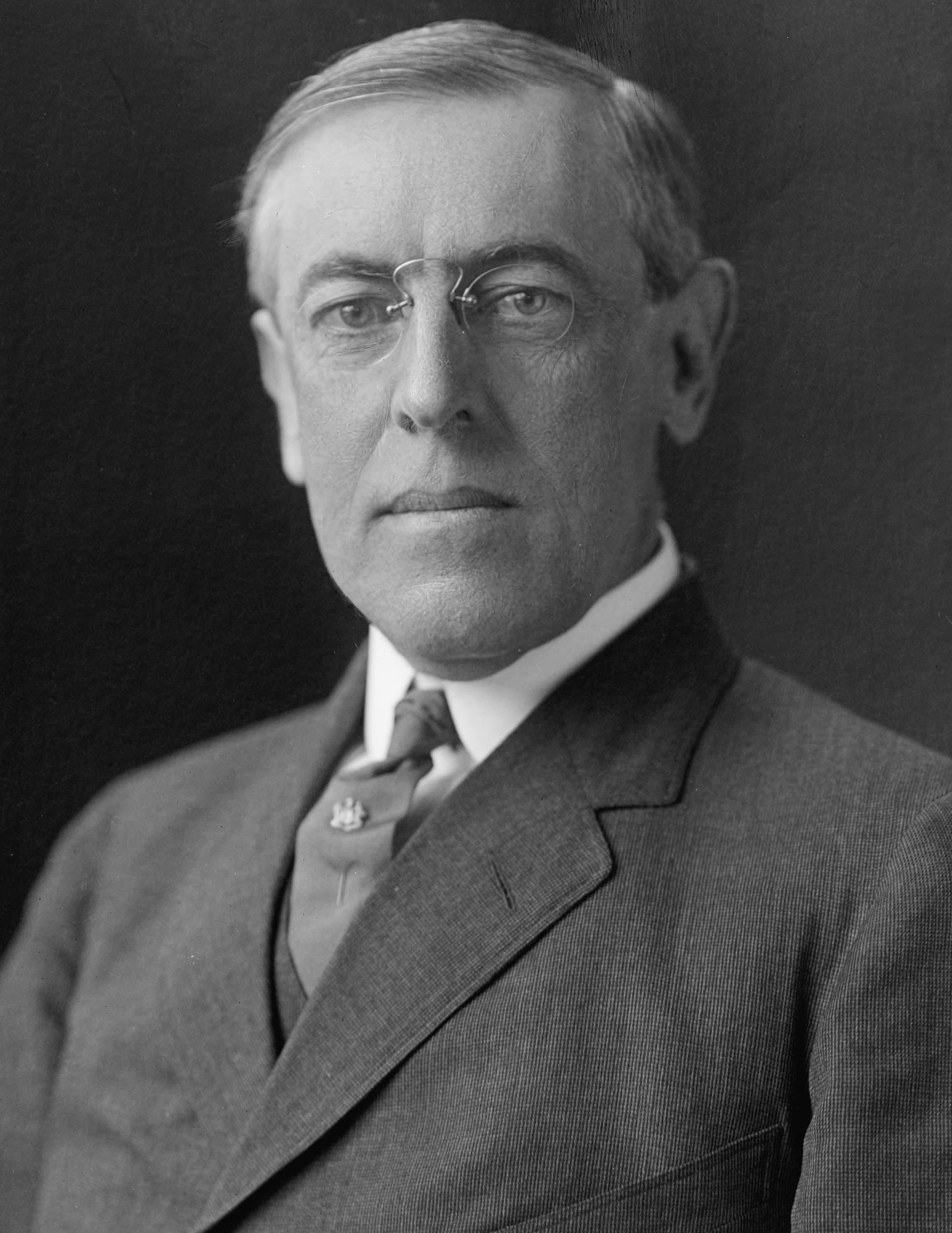 |
| Woodrow Wilson |
 |
| Calvin Coolidge |
 |
| Herbert Hoover |
Monday, December 5, 2016
Book Review: Claws of the Cat
Claws of the Cat: A Shinobi Mystery
Susan Spann
Mystery
I picked up this book because one of my closest friends had good things to say about the author. Not about her work--about her practical advice. Also, I'd seen Spann's books in the library and been cautiously interested. Interested, because of the setting: 16th century Japan. Cautious, because of the setting: writers of historical mysteries have an unfortunate tendency to blather on about the "historical" while short-changing the "mystery".
Inevitably, I wound up comparing Claws of the Cat to the last mystery I had read, Original Sin. With no disrespect intended to Susan Spann, P. D. James was a better writer. With very minor elisions, Claws of the Cat could have been a young-adult novel. There's very little strong descriptive prose in Claws of the Cat, and nothing much in the way of mood. The characters are, at best, two-dimensional: defined by a single attribute (you could label them the Angry Son, the Fearful Entertainer, and so on) and not straying far from that. One of the two principal characters, the Jesuit Father Mateo, is used mainly as a plot device--he asks the questions that his Japanese minder can't ask for social reasons.
Having said that, while I'm not likely to read any more P. D. James, I am likely to read more Susan Spann. I read for entertainment, and Spann is entertaining in a way that James isn't. She plays the game fairly and provides value for time invested. The setting is handled well. The pacing is good. The mystery is mysterious. The solution is satisfying.
Susan Spann may get better over time; she seems to take her craft seriously. I'm willing to find out.
Susan Spann
Mystery
I picked up this book because one of my closest friends had good things to say about the author. Not about her work--about her practical advice. Also, I'd seen Spann's books in the library and been cautiously interested. Interested, because of the setting: 16th century Japan. Cautious, because of the setting: writers of historical mysteries have an unfortunate tendency to blather on about the "historical" while short-changing the "mystery".
Inevitably, I wound up comparing Claws of the Cat to the last mystery I had read, Original Sin. With no disrespect intended to Susan Spann, P. D. James was a better writer. With very minor elisions, Claws of the Cat could have been a young-adult novel. There's very little strong descriptive prose in Claws of the Cat, and nothing much in the way of mood. The characters are, at best, two-dimensional: defined by a single attribute (you could label them the Angry Son, the Fearful Entertainer, and so on) and not straying far from that. One of the two principal characters, the Jesuit Father Mateo, is used mainly as a plot device--he asks the questions that his Japanese minder can't ask for social reasons.
Having said that, while I'm not likely to read any more P. D. James, I am likely to read more Susan Spann. I read for entertainment, and Spann is entertaining in a way that James isn't. She plays the game fairly and provides value for time invested. The setting is handled well. The pacing is good. The mystery is mysterious. The solution is satisfying.
Susan Spann may get better over time; she seems to take her craft seriously. I'm willing to find out.
Wednesday, November 30, 2016
Book Review: Mad Enchantment
Mad Enchantment: Claude Monet and the Painting of the Water Lilies
Ross King
Art, Biography, History
Ross King has written several lovely books. His best-known is Brunelleschi's Dome, which beautifully mixes art and architecture and politics and late-medieval history. I also liked The Judgment of Paris, chronicling the birth of Impressionism through the vitae parallelae of Ernest Meissonier (then famous, now obscure) and Edouard Manet (then obscure, now famous).
Mad Enchantment doesn't rise to that level. King's writing isn't the problem; it's his choice of subject matter. Justly famous though the Water Lilies series is, the story around it isn't really all that remarkable. In particular, a big chunk of Mad Enchantment involves the years-long negotiations surrounding Monet's donation of an indeterminate number of paintings to France. The unfortunate fact is that bureaucratic wrangling--however artistic the domain--is just not dramatic.
As Tracy Kidder has observed, "the techniques of fiction never belonged exclusively to fiction." The best parts of Mad Enchantment involve Monet himself: his tantrums, his fits of furious energy, his personal tragedies, his life at Giverny, and most especially his friendship with Georges Clemenceau (who was Prime Minster of France during World War I, among other things). Those parts make a story. The remainder. . . eh.
Ross King
Art, Biography, History
Ross King has written several lovely books. His best-known is Brunelleschi's Dome, which beautifully mixes art and architecture and politics and late-medieval history. I also liked The Judgment of Paris, chronicling the birth of Impressionism through the vitae parallelae of Ernest Meissonier (then famous, now obscure) and Edouard Manet (then obscure, now famous).
Mad Enchantment doesn't rise to that level. King's writing isn't the problem; it's his choice of subject matter. Justly famous though the Water Lilies series is, the story around it isn't really all that remarkable. In particular, a big chunk of Mad Enchantment involves the years-long negotiations surrounding Monet's donation of an indeterminate number of paintings to France. The unfortunate fact is that bureaucratic wrangling--however artistic the domain--is just not dramatic.
As Tracy Kidder has observed, "the techniques of fiction never belonged exclusively to fiction." The best parts of Mad Enchantment involve Monet himself: his tantrums, his fits of furious energy, his personal tragedies, his life at Giverny, and most especially his friendship with Georges Clemenceau (who was Prime Minster of France during World War I, among other things). Those parts make a story. The remainder. . . eh.
Sunday, November 27, 2016
Book Review: Noise
Noise: A Human History of Sound and Listening
David Hendy
Sociology
I was thinking of this as a companion book for Bruce Watson's book Light. (I bought it in the same very fine bookstore, too.) By comparison, Hendy's book--though very engagingly and conversationally written--is refreshingly free from Light's literary pyrotechnics. It's also, to give a linguistic point back to Bruce Watson, less focused. That's sort of appropriate. Light is specific; we see what's in front of us. Sound is general; we hear what the world sends us.
I'm not going to try to untangle David Hendy's theses. They're present, but they're not really central to the book. The ubiquity of sound means that Hendy has to ignore as much as he includes. His organization is chronological: he proceeds through time, picking up a sound-related theme in each chapter. It's a good structure, as long as you don't pretend to believe that the theme was the meaningful sound-related thing going on at that time. There would always have been others; it's just that to make room for them Noise would have to have been three hundred thousand pages long instead of three hundred.
As an instance, take chapter 22, "The Beat of a Heart, the Tramp of a Fly". Spatially, it falls about two-thirds of the way through Noise. It begins thus:
Understand, I'm not nitpicking because I disliked Noise. On the contrary: I love this stuff! There's a companion BBC radio series which I plan to listen to. Read the book as a sampler rather than pretending that it's really any kind of true, connected "history" and you'll be fine.
David Hendy
Sociology
I was thinking of this as a companion book for Bruce Watson's book Light. (I bought it in the same very fine bookstore, too.) By comparison, Hendy's book--though very engagingly and conversationally written--is refreshingly free from Light's literary pyrotechnics. It's also, to give a linguistic point back to Bruce Watson, less focused. That's sort of appropriate. Light is specific; we see what's in front of us. Sound is general; we hear what the world sends us.
I'm not going to try to untangle David Hendy's theses. They're present, but they're not really central to the book. The ubiquity of sound means that Hendy has to ignore as much as he includes. His organization is chronological: he proceeds through time, picking up a sound-related theme in each chapter. It's a good structure, as long as you don't pretend to believe that the theme was the meaningful sound-related thing going on at that time. There would always have been others; it's just that to make room for them Noise would have to have been three hundred thousand pages long instead of three hundred.
As an instance, take chapter 22, "The Beat of a Heart, the Tramp of a Fly". Spatially, it falls about two-thirds of the way through Noise. It begins thus:
In January 1780, a sixty-year-old Edinburgh man walked slowly through the streets of his home city, wheezing and puffing rather alarmingly. As he reached Infirmary Street, just to the south of the Old Town, he turned into Surgeon's Square.This leads into the development of the stethoscope, with further excursions toward amplification of sound in general. It's a nifty little essay. The only caveat is that it's only one tiny facet of what was happening in The Wonderful World of Sound (1780-1850), and that therefore there's a lot being left out. Hendy chose to write this particular chapter, in other words, and in so doing chose not to write about the neighs of horses or the chuffing of early steam engines or the clatter of the first telegraph keys or the thunk of the guillotine during the French Revolution or the thunder of the buffalo herds in the last days of their glory or . . .
Understand, I'm not nitpicking because I disliked Noise. On the contrary: I love this stuff! There's a companion BBC radio series which I plan to listen to. Read the book as a sampler rather than pretending that it's really any kind of true, connected "history" and you'll be fine.
Tuesday, November 22, 2016
Book Review: The Path
The Path: What Chinese Philosophers Can Teach Us About the Good Life
Michael Puett, Christine Gross-Loh
Philosophy
The Path is based on an introductory course at Harvard. As such it's, well, introductory. That's appropriate for me because I know next to nothing about Chinese philosophy. However, The Path is maybe a little too introductory.
To begin with, in its eagerness to draw a contrast with Western philosophy, it oversimplifies. Puett and Gross-Loh make a bunch of grand historical generalizations ("the West is/was . . . " this, that, or the other). Many of these are, at best, hard to substantiate. Some of them struck me as kind of dumb. For example: it may be true that the emergence of philosophical writing occurred at roughly the same time in China and Greece, and that war epics emerged at about that time in both regions, but it's a stretch to suppose a causal connection between the epics and the philosophy. Rather, the connection is literacy: there are no war epics from 8th-century-BC Britain because there's no written literature from 8th-century-BC Britain.
The same is true of the book's take on philosophy itself. The Path claims to draw contrasts between the Chinese and occidental philosophical traditions, but it mainly talks about the latter in terms of pop psychology straw-man arguments. It doesn't really engage with European thinkers at all. Take this summation of one Chinese tradition:
Finally, to the extent that The Path accurately represents Chinese philosophy, I don't like Chinese philosophy. It's empirically true that, for example, brain scans show that we make a lot of so-called "rational" choices based on intuition, prejudice, emotion, and sloppy thinking. It does not follow that we should therefore embrace intuition, prejudice, emotion, and sloppy thinking. On the contrary: these facts make it a positive moral duty to strive to become better, more rational decision makers. That's my interpretation of, for instance, this:
Being non-rational isn't hard. There are many people who, like the philosopher Zuangzhi, have "trained [them]selves to become 'spontaneous' through daily living, rather than closing [them]selves off through what we think of as rational decision-making". A lot of them end up spontaneously launching pogroms, overdosing on heroin, committing vandalism, and voting for demagogues.
Michael Puett, Christine Gross-Loh
Philosophy
The Path is based on an introductory course at Harvard. As such it's, well, introductory. That's appropriate for me because I know next to nothing about Chinese philosophy. However, The Path is maybe a little too introductory.
To begin with, in its eagerness to draw a contrast with Western philosophy, it oversimplifies. Puett and Gross-Loh make a bunch of grand historical generalizations ("the West is/was . . . " this, that, or the other). Many of these are, at best, hard to substantiate. Some of them struck me as kind of dumb. For example: it may be true that the emergence of philosophical writing occurred at roughly the same time in China and Greece, and that war epics emerged at about that time in both regions, but it's a stretch to suppose a causal connection between the epics and the philosophy. Rather, the connection is literacy: there are no war epics from 8th-century-BC Britain because there's no written literature from 8th-century-BC Britain.
The same is true of the book's take on philosophy itself. The Path claims to draw contrasts between the Chinese and occidental philosophical traditions, but it mainly talks about the latter in terms of pop psychology straw-man arguments. It doesn't really engage with European thinkers at all. Take this summation of one Chinese tradition:
Living in a capricious world means accepting that we do not live within a stable moral cosmos that will always reward people for what they do . . . We should always expect to be surprised and learn to work with whatever befalls us. If we can continue this work, even when tragedies come our way, we can begin to accept the world as unpredictable and impossible to determine perfectly . . . We can go into each situation resolved to be the best human being we can be, not for what we'll get out to it, but simply to affect others around us for the better, regardless of the outcome.OK, great. Only . . . doesn't it sound kind of similar to this?
Begin each day by telling yourself: Today I shall be meeting with interference, ingratitude, insolence, disloyalty, ill-will, and selfishness – all of them due to the offenders’ ignorance of what is good or evil. But for my part I have long perceived the nature of good and its nobility, the nature of evil and its meanness, and also the nature of the culprit himself, who is my brother (not in the physical sense, but as a fellow creature similarly endowed with reason and a share of the divine); therefore none of those things can injure me, for nobody can implicate me in what is degrading. Neither can I be angry with my brother or fall foul of him; for he and I were born to work together, like a man’s two hands, feet or eyelids, or the upper and lower rows of his teeth.The second one isn't a Chinese sage talking. No, that's Marcus Aurelius, emperor of Rome and one of the last great Stoic philosophers. Other "revolutionary" concepts in The Path sound a lot like Epicureanism, or even like classical skepticism (which is a little different from the modern understanding).
Finally, to the extent that The Path accurately represents Chinese philosophy, I don't like Chinese philosophy. It's empirically true that, for example, brain scans show that we make a lot of so-called "rational" choices based on intuition, prejudice, emotion, and sloppy thinking. It does not follow that we should therefore embrace intuition, prejudice, emotion, and sloppy thinking. On the contrary: these facts make it a positive moral duty to strive to become better, more rational decision makers. That's my interpretation of, for instance, this:
A monkey trainer was handing out nuts, saying, "You get three in the morning, and four at night." The monkeys were enraged. So he said, "All right, then, you get four in the morning and three at night." The monkeys were thrilled.This is meant to argue that it's better to adjust your way of thinking than to make yourself unhappy. That's nice. As a Westerner, though, I believe in the power of reason. It is better to have the trainer's rational understanding than the monkeys' non-rational sentiments.
Being non-rational isn't hard. There are many people who, like the philosopher Zuangzhi, have "trained [them]selves to become 'spontaneous' through daily living, rather than closing [them]selves off through what we think of as rational decision-making". A lot of them end up spontaneously launching pogroms, overdosing on heroin, committing vandalism, and voting for demagogues.
Sunday, November 20, 2016
Book Review: Original Sin
Original Sin
P. D. James
Mystery
I have always thought that P. D. James was vastly overrated. She'd have been a better mystery writer if she'd practiced what she preached. However, I've been doing some (dare I say) professional investigations of mystery writing--reading analytically, in other words, with an eye towards how it all works. I hadn't read any of James's work in decades. She's considered an important writer. So . . .
The first thing that struck me is that I can see why James was the darling of the lit-crit types. She focuses heavily on character. Every single significant character, and a number of the minor ones, gets five to ten pages of backstory. The backstory inevitably some lugubrious tale of how life, fate, daddy, poverty, religion, etc. etc. etc. made the character miserable and insecure and neurotic. They're all differently neurotic, but they're all neurotic. (Except for some characters who are Not of the Correct Social/Professional Standing, who are permitted to be ordinary.) A good deal of it strikes me as faintly absurd, as for example:
But, okay, the writing itself is generally pretty good. Sometimes it's very good, particularly when James is doing description and mood. The setup is good. The pacing flows along nicely. We have a variety of motives and a variety of suspects and some alibis. I was starting to enjoy myself.
Until page 504. That's when the murderer reveals himself. The detectives don't do anything. The killer just pops out and says, in effect: hi, I did it. For all the good they do, Adam Dalgliesh and his high-powered team of investigators might as well have stayed home polishing their backstories.
I am not exaggerating here. The body is discovered on page 141. From the narrative point of view, nothing that occurs in the next 363 pages makes any damn difference whatsoever.
In fact, the only thing our detectives actually detect is the motive. This they eventually discover by the brilliant deductive technique of sitting down and reading the documents in the room where the body was found. Having made this Socratic leap of intellect, they promptly use the discovery to FAIL TO PREVENT ANOTHER MURDER.
Gad! The master criminals of England must be quaking in their boots!
Oh, and that motive? It's one of these. (Discovering the motive will probably spoil the book for you; if you still want to read it, don't follow the link!)
Original Sin is, for all its literary aspirations and elegant writing, pretentious drivel. It does precisely the things that P. D. James herself said that a mystery novel ought never do. Let me use her own analogy against her: if you are a poet, and you make the deliberate decision to write a sonnet, you should then actually follow the rules of the form. Don't whinge about how you can't express yourself in fourteen lines. Don't go around boasting that you've expanded the possibilities of the form by writing a limerick and calling it a sonnet. You made the decision to write in this form. Do it or go away.
There are very few people who know how to write classical-form mysteries nowadays. Right now only Aaron Elkins and Steve Hockensmith are on my list. If you discover another, please let me know.
P. D. James
Mystery
I have always thought that P. D. James was vastly overrated. She'd have been a better mystery writer if she'd practiced what she preached. However, I've been doing some (dare I say) professional investigations of mystery writing--reading analytically, in other words, with an eye towards how it all works. I hadn't read any of James's work in decades. She's considered an important writer. So . . .
The first thing that struck me is that I can see why James was the darling of the lit-crit types. She focuses heavily on character. Every single significant character, and a number of the minor ones, gets five to ten pages of backstory. The backstory inevitably some lugubrious tale of how life, fate, daddy, poverty, religion, etc. etc. etc. made the character miserable and insecure and neurotic. They're all differently neurotic, but they're all neurotic. (Except for some characters who are Not of the Correct Social/Professional Standing, who are permitted to be ordinary.) A good deal of it strikes me as faintly absurd, as for example:
She yearned for his love and approbation. She had listened dutifully, had asked the right questions, had instinctively known that this was an interest he assumed that she would share. But she realized now that the deception had only added guilt to her natural reserve and timidity, that the river had become more terrifying because she could not acknowledge its terrors and her relationship with her father more distant because it was founded on a lie.This is, as the British put it, over-egging the pudding.
But, okay, the writing itself is generally pretty good. Sometimes it's very good, particularly when James is doing description and mood. The setup is good. The pacing flows along nicely. We have a variety of motives and a variety of suspects and some alibis. I was starting to enjoy myself.
Until page 504. That's when the murderer reveals himself. The detectives don't do anything. The killer just pops out and says, in effect: hi, I did it. For all the good they do, Adam Dalgliesh and his high-powered team of investigators might as well have stayed home polishing their backstories.
I am not exaggerating here. The body is discovered on page 141. From the narrative point of view, nothing that occurs in the next 363 pages makes any damn difference whatsoever.
In fact, the only thing our detectives actually detect is the motive. This they eventually discover by the brilliant deductive technique of sitting down and reading the documents in the room where the body was found. Having made this Socratic leap of intellect, they promptly use the discovery to FAIL TO PREVENT ANOTHER MURDER.
Gad! The master criminals of England must be quaking in their boots!
Oh, and that motive? It's one of these. (Discovering the motive will probably spoil the book for you; if you still want to read it, don't follow the link!)
Original Sin is, for all its literary aspirations and elegant writing, pretentious drivel. It does precisely the things that P. D. James herself said that a mystery novel ought never do. Let me use her own analogy against her: if you are a poet, and you make the deliberate decision to write a sonnet, you should then actually follow the rules of the form. Don't whinge about how you can't express yourself in fourteen lines. Don't go around boasting that you've expanded the possibilities of the form by writing a limerick and calling it a sonnet. You made the decision to write in this form. Do it or go away.
There are very few people who know how to write classical-form mysteries nowadays. Right now only Aaron Elkins and Steve Hockensmith are on my list. If you discover another, please let me know.
Wednesday, November 9, 2016
Uncharted Waters
WARNING: politics ahoy.
I am not a historian, but I do read a good many history books. What follows is my best attempt at analyzing what's going on in the wake of Donald Trump's election. I'm specifically trying to be factual rather than polemical, but obviously my prejudices will color my conclusions.
So now what? Well, whatever else it may be, Trumpism is manifestly:
The United States has never before had a mass nationalist-populist-authoritarian political movement--at least, not one with this kind of power. Andrew Jackson came close, but Jackson in the 1820s was at least in harmony with his own political party. Huey Long took some steps in that direction before he was assassinated. The 19th-century "Know-Nothings" were profoundly nativist, and (briefly) had significant political power, but they didn't have the other characteristics.
So, as the title says: we're in uncharted waters.
However: other nations have had, and continue to have, nationalist-populist-authoritarian political parties. Historical comparisons are unavoidably fraught with emotion, but there are plenty of current examples. Consider Hugo Chavez in Venezuela, Recep Tayyip Erdogan in Turkey, and (no avoiding this one) Vladimir Putin in Russia. To find out what's in store for the U.S., we can look at these. I draw these conclusions:
I am not a historian, but I do read a good many history books. What follows is my best attempt at analyzing what's going on in the wake of Donald Trump's election. I'm specifically trying to be factual rather than polemical, but obviously my prejudices will color my conclusions.
So now what? Well, whatever else it may be, Trumpism is manifestly:
- Nationalist, in that it embraces an "America First" ideology;
- Populist, in that it stokes up and harnesses anger directed at elites; and
- Authoritarian, in that an admiration for "strength" seems to be a core belief both for Trump and for his followers.
The United States has never before had a mass nationalist-populist-authoritarian political movement--at least, not one with this kind of power. Andrew Jackson came close, but Jackson in the 1820s was at least in harmony with his own political party. Huey Long took some steps in that direction before he was assassinated. The 19th-century "Know-Nothings" were profoundly nativist, and (briefly) had significant political power, but they didn't have the other characteristics.
So, as the title says: we're in uncharted waters.
However: other nations have had, and continue to have, nationalist-populist-authoritarian political parties. Historical comparisons are unavoidably fraught with emotion, but there are plenty of current examples. Consider Hugo Chavez in Venezuela, Recep Tayyip Erdogan in Turkey, and (no avoiding this one) Vladimir Putin in Russia. To find out what's in store for the U.S., we can look at these. I draw these conclusions:
- These regimes tend to become repressive over time. The weaker the nation's civil and political institutions, the faster the repressiveness comes. If anyone has an example of a nationalist-populist-authoritarian regime which has not tended toward repression, please leave me a comment.
- A core constituency develops whose members will never under any circumstances turn on the leader. It doesn't matter how far the leader goes or in what direction. As long as they feel that the Strong Man stays strong, his adherents will follow him.
- When I say "the leader," I mean "the leader." It's not a group or an explicit ideology that animates the movement. It's hero-worship of a particular man. (I can't come up with a single female example off the top of my head.)
- The leader usually surrounds himself with loyalists. They may be competent or incompetent; that's neither here nor there to the boss. They are never strong enough to stand up to the autocrat in their own right, but they often use their position to build up their own power bases.
- Once in power, the regime takes steps to remain in power. Opposition politicians, bureaucrats, judges, and so forth are removed or neutralized. Non-core or borderline supporters are forced to choose: join the movement, or be purged. The vast majority of them join.
The third bullet is another interesting point. Trump is seventy years old. Strong-man leaders don't have a great record of transferring their authority to anyone else (Nicolas Maduro and Dmitriy Medvedev are cases in point). We're probably still too early in the process for him to pull off a family dynasty a la North Korea or Syria. Prognosis: unknown.
Finally, the U.S. has generally had strong civil institutions. It may be that they will check the repressive tendencies of the neo-Republican/Trumpist movement, or at least slow it down--through sheer inertia, if nothing else. Barring a major policy blunder, however, I think we are likely to see our politics dominated by mobs of insecure and angry white people for some time to come.
Tuesday, November 8, 2016
Book Review: A Burglar's Guide to the City
A Burglar's Guide to the City
Geoff Manaugh
Architecture, crime
This is a good book for anyone who likes heist movies and caper plots--or, since I know my audience, anyone who plays games that invoke heist movies and caper plots. It's also one of those books whose structure mirrors its subject matter. Whether that's a good thing or a bad one is a matter of taste.
Manaugh starts with a simple premise: burglary--that is, stealing stuff from a structure--requires architecture, and architecture shapes burglary. Burglars see the city differently. They'll do things like camp out in a dumpster for the purpose of putting a hole in an adjacent wall. They'll burrow in at the north end of a row of connected buildings in order to steal something at the south end. Where you and I see streets, they see escape routes.
It's fascinating stuff. Manaugh serves up a feast of anecdotes and a wealth of extraordinary tidbits. Like his burglars, he tunnels from one thing to another. You can never tell where he's going to pop up next. Safe rooms, legal quiddities, an aerial view of Los Angeles, tips from a retired (?) burglar, forced-entry techniques, hobbyist lock-pickers, you name it: it's all here. As I was reading A Burglar's Guide to the City, I kept thinking: "This is more like a series of connected blog posts than a book". And lo and behold, once I got to the footnotes, I discovered that that's how it began.
I have a boundless appetite for useless knowledge. I enjoyed A Burglar's Guide to the City quite a lot. It's not ultimately as informative as it might be, though, because the random globs of information never really cohere. Arguably it should have stayed in the blogosphere . . . but if it had I'd probably have missed out on the useless knowledge aforesaid, and that would be a shame.
Geoff Manaugh
Architecture, crime
This is a good book for anyone who likes heist movies and caper plots--or, since I know my audience, anyone who plays games that invoke heist movies and caper plots. It's also one of those books whose structure mirrors its subject matter. Whether that's a good thing or a bad one is a matter of taste.
Manaugh starts with a simple premise: burglary--that is, stealing stuff from a structure--requires architecture, and architecture shapes burglary. Burglars see the city differently. They'll do things like camp out in a dumpster for the purpose of putting a hole in an adjacent wall. They'll burrow in at the north end of a row of connected buildings in order to steal something at the south end. Where you and I see streets, they see escape routes.
It's fascinating stuff. Manaugh serves up a feast of anecdotes and a wealth of extraordinary tidbits. Like his burglars, he tunnels from one thing to another. You can never tell where he's going to pop up next. Safe rooms, legal quiddities, an aerial view of Los Angeles, tips from a retired (?) burglar, forced-entry techniques, hobbyist lock-pickers, you name it: it's all here. As I was reading A Burglar's Guide to the City, I kept thinking: "This is more like a series of connected blog posts than a book". And lo and behold, once I got to the footnotes, I discovered that that's how it began.
I have a boundless appetite for useless knowledge. I enjoyed A Burglar's Guide to the City quite a lot. It's not ultimately as informative as it might be, though, because the random globs of information never really cohere. Arguably it should have stayed in the blogosphere . . . but if it had I'd probably have missed out on the useless knowledge aforesaid, and that would be a shame.
Monday, November 7, 2016
Book Review: Of Arms and Artists
Of Arms and Artists: The American Revolution Through Painters' Eyes
Paul Staiti
Art, biography, history
Paul Staiti has an interesting idea. He wants to talk about the uses and meanings of art in a time of revolution. He doesn't completely pull it off, but it's a worthwhile try.
The biggest problem with Of Arms and Artists is that it's kind of all over the map structure-wise. It's sort of chronological, but not exactly. It sort of examines each artist in turn, but skips around a lot (somewhat inevitably, since the artists in question lived interconnected lives). It's thematic in places, but not consistently; the themes--art-as-propaganda, art-as-documentation, art-as-mythmaking, art-as-politics, art-as-history--surface and disappear and resurface.
All the same, these are pretty interesting notions. In an age before photography, a portrait of George Washington would never convey a message as simple as "This is what General Washington looks like." Every portrait, every history painting, every genre painting, was not just an image but an attempt to influence. Staiti is at his best when he's decoding the messages in the paintings. There are often a great many levels of meaning, and some of them are largely lost to a modern viewer.
Also, the art itself is wonderful. Look at the confident glow in John Singleton Copley's portrait of Elkanah Watson, as America's independence is confirmed:
 Or Washington's cool, crossed-legged insouciance in Charles Willson Peale's portrait:
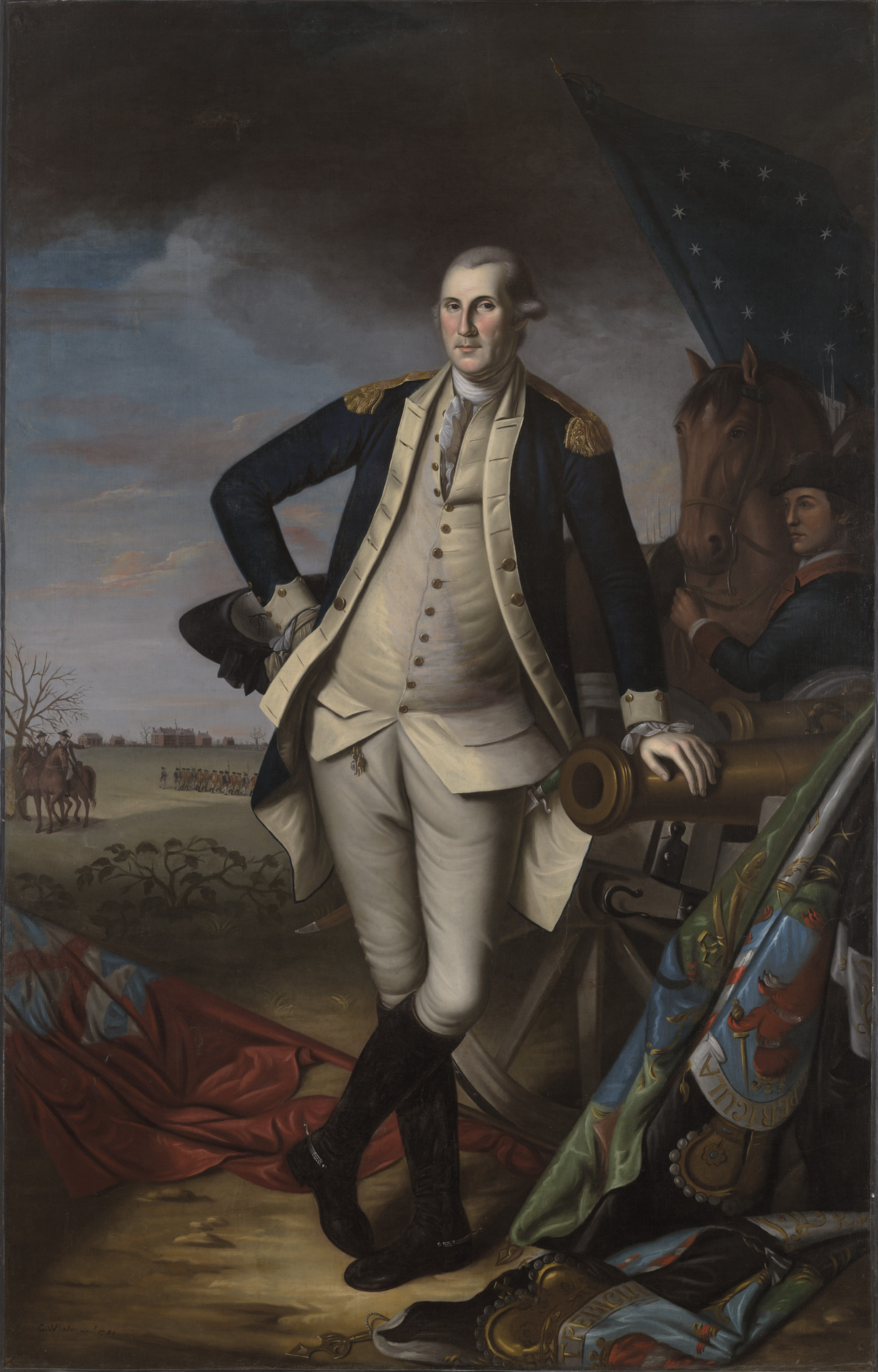 It's hard to go too far wrong with this kind of source material.
An odd little book that covers some related territory from a different angle is The Painter's Chair: George Washington and the Making of American Art.
Paul Staiti
Art, biography, history
Paul Staiti has an interesting idea. He wants to talk about the uses and meanings of art in a time of revolution. He doesn't completely pull it off, but it's a worthwhile try.
The biggest problem with Of Arms and Artists is that it's kind of all over the map structure-wise. It's sort of chronological, but not exactly. It sort of examines each artist in turn, but skips around a lot (somewhat inevitably, since the artists in question lived interconnected lives). It's thematic in places, but not consistently; the themes--art-as-propaganda, art-as-documentation, art-as-mythmaking, art-as-politics, art-as-history--surface and disappear and resurface.
All the same, these are pretty interesting notions. In an age before photography, a portrait of George Washington would never convey a message as simple as "This is what General Washington looks like." Every portrait, every history painting, every genre painting, was not just an image but an attempt to influence. Staiti is at his best when he's decoding the messages in the paintings. There are often a great many levels of meaning, and some of them are largely lost to a modern viewer.
Also, the art itself is wonderful. Look at the confident glow in John Singleton Copley's portrait of Elkanah Watson, as America's independence is confirmed:
An odd little book that covers some related territory from a different angle is The Painter's Chair: George Washington and the Making of American Art.
Thursday, November 3, 2016
Book Review: Death's End
Death's End
Cixin Liu (author), Ken Liu (translator)
Science fiction
Death's End is the third in an ambitious SF trilogy originally written and published in China. The first, The Three-Body Problem, won a Hugo Award; I generally concurred. The second, The Dark Forest, was less successful; I ultimately found it worthwhile, with reservations. Death's End, regrettably, has all of the drawbacks and few of the virtues of The Dark Forest.
Some of the drawbacks may be cultural. It's clear that readers' expectations differ widely across the world. In English fiction, for example, there's the famous shibboleth "show, don't tell." Like all hard-and-fast rules it's often overblown, but it's still there: it's part of the expectation. This expectation is blatantly violated in all three of Liu's books, and The Dark Forest is perhaps the worst of the three.
Similarly, I have strong reservations about (for example) a chapter that consists of twelve pages of dense descriptive text with a single lonely line of dialogue--or, strictly speaking, monologue--on page three. It's jarring at best and absurd at worst.
It's especially absurd when Liu spends his word count describing large-scale social changes which have no effect on the actual plot. For example: at one point, we're told that there's a large-scale religious revival--so much so that a giant illuminated cross is placed in orbit. About a quarter-inch of book (and some years of timeline) later, we're told that the revival has faded and they're dismantling the cross. That's all we hear about the matter.
The biggest problem by far, however, is characterization. One of three things is going on:
Now, none of this is without parallel in the English-speaking SF world. The largely-unread classics of Olaf Stapledon are one example. More recently, I'd cite the inexplicably popular Stephen Baxter, whose books are all basically travelogues. If you like either of these guys, particularly Baxter, go ahead and read Death's End. (It's not a slog, for what that's worth. I was, much of the time, eager to find out what happened next.) Otherwise, I'd only recommend this to readers who liked both of the first two books and want to know how it all turns out.
Cixin Liu (author), Ken Liu (translator)
Science fiction
Death's End is the third in an ambitious SF trilogy originally written and published in China. The first, The Three-Body Problem, won a Hugo Award; I generally concurred. The second, The Dark Forest, was less successful; I ultimately found it worthwhile, with reservations. Death's End, regrettably, has all of the drawbacks and few of the virtues of The Dark Forest.
Some of the drawbacks may be cultural. It's clear that readers' expectations differ widely across the world. In English fiction, for example, there's the famous shibboleth "show, don't tell." Like all hard-and-fast rules it's often overblown, but it's still there: it's part of the expectation. This expectation is blatantly violated in all three of Liu's books, and The Dark Forest is perhaps the worst of the three.
Similarly, I have strong reservations about (for example) a chapter that consists of twelve pages of dense descriptive text with a single lonely line of dialogue--or, strictly speaking, monologue--on page three. It's jarring at best and absurd at worst.
It's especially absurd when Liu spends his word count describing large-scale social changes which have no effect on the actual plot. For example: at one point, we're told that there's a large-scale religious revival--so much so that a giant illuminated cross is placed in orbit. About a quarter-inch of book (and some years of timeline) later, we're told that the revival has faded and they're dismantling the cross. That's all we hear about the matter.
The biggest problem by far, however, is characterization. One of three things is going on:
- People in China are just extraordinarily unlike Americans. (Unlikely. I've had many co-workers from China. They're people.)
- Cixin Liu is a very very strange man with very very strange ideas about people. (Possible.)
- The conventions of fiction are incompatible.
Character 1: Hey, how about you give me all your money and everything you've built up and basically your entire life, and go into hibernation for a while. Do it for the sake of the human spirit.That's a nice compact example, but it's far from the weirdest one.
Character 2: Okay! Sounds like a plan!
Now, none of this is without parallel in the English-speaking SF world. The largely-unread classics of Olaf Stapledon are one example. More recently, I'd cite the inexplicably popular Stephen Baxter, whose books are all basically travelogues. If you like either of these guys, particularly Baxter, go ahead and read Death's End. (It's not a slog, for what that's worth. I was, much of the time, eager to find out what happened next.) Otherwise, I'd only recommend this to readers who liked both of the first two books and want to know how it all turns out.
Subscribe to:
Posts (Atom)