A Revolution in Color: The World of John Singleton Copley
Biography
Jane Kamensky
Maybe it's the title. I wanted A Revolution in Color to do something, well, revolutionary--or, at least, revelatory. Something about Copley's painting, perhaps, comparable to the outstanding Eye of the Beholder. Or something about his life, or his times, or politics, or art, or . . . something about something, anyway.
Instead, A Revolution in Color is a basic standard biography. If Copley had kept a diary, and Kamensky had written a book based on it, this is more or less what you'd get. Date, event, painting, reaction, marriage, interaction, repeat. It's mildly interesting to read about Revolutionary-era Boston through a comparatively conservative lens--although I think Kamensky overstates the latter--but that doesn't particularly require, or shed light on, Copley's art.
Every so often it looks like Kamensky is trying to establish a theme around African-Americans (and African-Britons). She makes repeated references to black people's experiences, their presence in Copley's life, their presentation in art, and so forth. To the extent that this rescues the black experience from enforced anonymity, that's great. But in the context of A Revolution in Color, none of it adds up to anything. Kamensky never sustains the subject, nor does she bring to it a coherent story of what it meant to Copley. Yes, he would have known black people. Yes, he sometimes depicted them. Yes, they were unjustly enslaved and erased from history. And . . . ?
Also, Kamensky's writing is not flawless. Late in the book she shifts repeatedly between the past tense and the present, to no very good effect. She also needs to learn the use of "would" rather than "will" to indicate that an event is in the reader's past but in the future of the moment she's describing. (Example: "In 1905 Einstein published a paper on the photoelectric effect; he would win the Nobel Prize for it in 1922.")
This isn't to say A Revolution in Color is valueless. It's an OK resource for learning about Copley and about his artistic milieu. As anything more than that, it doesn't live up to the title.
Showing posts with label Art. Show all posts
Showing posts with label Art. Show all posts
Tuesday, March 26, 2019

Thursday, October 25, 2018
Professor Allen Guttman
My uncle, who taught English and American Studies at Amherst College from 1959 to 2013, just turned eighty-six. He's still running every day and writing academic articles.


Tuesday, September 25, 2018
Book Review: How Do We Look
How Do We Look: The Body, the Divine, and the Question of Civilisation
Mary Beard
Art, psychology
I very much liked Beard's SPQR, with the caveat that she sometimes descended into a kind of erudite waffling--it might have been this way, but on the other hand we should be skeptical, but on the other hand Plutarch says such-and-such, but nonetheless on the other hand . . . How Do We Look contains some germs of an interesting idea, but the caveat has grown to consume the book.
It's not much of a book, to be honest. It's short. Almost half of it consists of (gorgeous) illustrations. Even within its text, it's divided into two largely disjointed sections: one where Beard considers portraiture (especially sculpture), and another where she considers religious art. The tenuous thread that unites the halves is . . . Um. Well. That's the problem, really. I'm not sure there's a thread even within the sections, much less between them.
I mean, there's something. Beard is trying to write a thought-provoking book about how we, the viewers, respond to art--how our expectations shape our experience of the piece, how the piece communicates to us across time and culture, how the concerns of the artist are or aren't relevant to us. It's got interesting bits: Christians are commanded not to worship graven idols, for example, yet they dress up the Crying Madonna of Macarena like a Barbie doll and parade it through the streets. That says something interesting about the way people project their desires onto an artwork. I'm just not sure what, and Beard doesn't really want to tell me.
The caveat to my caveat is that How Do We Look isn't really a stand-alone work. It's a companion piece to a new BBC TV series, a response to Kenneth Clarke's deservedly famous and influential Civilisation. What works poorly on the page would, I imagine, work better on screen. I don't often recommend viewing over reading, but How Do We Look is an exception.
Monday, August 20, 2018
Book Review: A Long Time Coming
A Long Time Coming
Aaron Elkins
Mystery
Ahh, the classic looted-Nazi-art suspense tale. Aaron Elkins has done this sort of thing before, in the Chris Norgren novels and the standalone thrillers Loot and Turncoat. And you know what? Like the art itself, it never gets old.
A Long Time Coming picks up speed gradually; it's about the middle of the book before the violence begins. I didn't mind. The setup is interesting in its own right, and the story of Solomon Bezzecca--the victim of the looting--is quite powerful. Once the scene shifts to Milan (yes, it's another one of those books that makes you want to travel someplace and eat things) the plot thickens nicely, with several layers of murkily-agenda'd characters to choose among. There's some good art history and some good art technical details and a nice cryptic development or two for the protagonist to puzzle over.
It's not groundbreaking. It's not going to be picked up for a big-budget Hollywood thriller starring Tom Cruise. It is, however, great fun. I'm not generally prone to car metaphors--I'm a train nut--but I can't help thinking of A Long Time Coming as the literary equivalent of a ride in a sports car with a good driver. The gear changes come smoothly, you get just the right amount of excitement, the car handles superbly, and when you get to the end you'd be happy to do it again.
Or, to put it another way: not once did I think "Oh, come on, I could do better than that." If you think that's a low bar, you didn't read this, this, this, this, this, or this. Among others.
Wednesday, December 20, 2017
Book Review: Meetings with Remarkable Manuscripts
Meetings With Remarkable Manuscripts
Christopher de Hamel
Books, literature, history
Meetings With Remarkable Manuscripts is like a celebrity blog for old books. That's the author's simile, not mine, and it's absolutely 100% accurate. If that doesn't sound interesting to you, move along.
Still here? Good. This is Christopher de Hamel's attempt to give book lovers the intellectual/sensory/visceral experience of interacting with these beautiful but inaccessible objects. Most of us can't do this. If you go to Dublin, for example, you should definitely take a look at the Book of Kells . . . but your experience will be limited to looking at a few pages, behind glass, in a dimly-lit room, with throngs of other people elbowing you. Christopher de Hamel has access unavailable to us mortals. He gets to actually sit there with the book in front of him.
Lucky bastard.
Meetings With Remarkable Manuscripts is both intimate and wide-ranging. Every chapter details one manuscript's history, description, meaning, social context, physical description, location, highlights, and more. Most remarkable, to me, is the fact that in many cases de Hamel plausibly identifies specific individuals--not just patrons, but owners and carriers and artists and scribes--who worked on the volumes. If you don't get a little frisson at thinking about a specific, named person carefully drawing the page you're looking at, sitting there in a dark monastery a thousand years ago . . . I dunno, maybe you should see a shrink or something. These manuscripts are stunningly beautiful, and the book is lavishly illustrated; it's only a shame that it's impossible to reproduce the luster of gold leaf.
The one thing I can imagine some readers finding off-putting is de Hamel's tone. Some might call it witty and wry. Others might find it clubby, insular, and condescending. I didn't object to it, particularly, but then I've been hardened by years of exposure to this sort of thing. Let's just say that Christopher de Hamel is a character in his own book.
Saturday, November 4, 2017
Book Review: The Rise and Fall of Adam and Eve
The Rise and Fall of Adam and Eve
Stephen Greenblatt
Religion, art, philosophy
This is a pretty good, readable account of the purposes to which people have put the Adam and Eve story. (As a person with no religious background whatsoever, I found some of it decidedly odd.) Greenblatt is at his best when he resists the temptation to theorize; happily, the bulk of The Rise and Fall of Adam and Eve takes the form of good, clear, interesting accounts of what other people have thought.
The account is perhaps a little uneven. There are big chunks devoted to St. Augustine and to John Milton, for example, but there's not much in between them. I didn't mind, particularly--a comprehensive survey would surely have been unreadable--but it's of a piece with Greenblatt's other books, which make it clear that in his mind everything between Rome and the Renaissance was a mistake. The book also digresses from Adam and Eve in spots, but the digressions are interesting, so I didn't mind that either. Pay attention and you may learn a little bit about paleoanthropology, a certain amount about art, a few snippets of poetry, and (in a surprisingly moving closing essay) something significant on chimpanzees.
This is, then, the kind of book that's ideally suited to the pondering classes. It's not a deep philosophical-theological dive. It's not an exhaustive history. You could call it a highlights reel, picking out some key ideas and interpretations of the Adam and Eve fable. No doubt readers who are more theologically sophisticated than I will find little new here, but I quite liked it.
There's a strong connection between The Rise and Fall of Adam and Eve and Born Bad, which I read in 2015. Greenblatt's book is better, though.
Monday, July 17, 2017
Book Review: Piero's Light
Piero's Light: In Search of Piero della Francesca: A Renaissance Painter and the Revolution in Art, Science, and Religion
Larry Witham
Art, philosophy, biography
The thread that ties Piero's Light together is Plato. Larry Witham--himself clearly a Platonist--makes the argument that the rediscovery of Platonic idealism in Quattrocento Italy is not only crucial to understanding Piero's art, but important for understanding the role of art in general.
Me, I'm pretty much an Aristotelian. I don't discount Piero's Light on those grounds, but I'm doubtful of some of Witham's conclusions. It's one thing to argue that the Platonic search for absolutes informs Piero's art. It's another thing to lose your grounding on those pesky Aristotelian facts and start rhapsodizing about stuff that, arguably, isn't actually there.
Rather than write a long detailed screed, let me just focus on one particular claim: the claim that Piero della Francesca was a particular master of a kind of meaningful stillness, of what theart snob connoisseur Bernard Berenson called the "inarticulate", a serenity that passeth understanding:
That this painting is beautiful is hard to dispute. That it displays a kind of formal, posed quality in the figures is also fairly evident. That the latter is the cause of the former, and that it represents Piero's astonishing artistic genius, is a much more complex proposition. As a counterexample, consider this snippet of a later work:
This is clearly an attempt to represent action, not stillness. But--and I say this as someone who's done non-trivial quantities of both art and illustration, including for pay*--it's not successful. The rearing horse isn't serene; it's just stiff. Believe me, rendering action is hard. Piero, it seems clear, was pushing both the limits of his own technical skill and the limits of the conventions of his time. It's no discredit to him to point out those limits. It's perfectly reasonable to admire the result on its own terms. Equally, however, it's not right to credit him with an "innovation" that he himself would probably have rejected.
As to the larger claims in Piero's Light, they are for the most part unconvincing. Witham's understanding of science is not a strong point, and his "revolution in Art" is compromised by his unwillingness to call out the art historians he's quoting when they're talking obvious nonsense. (They do this quite a lot.) His writing is clear, but it lacks humor or vividness; "pedestrian" is a little too harsh, but it's heading in the right direction. As a result, Piero's Light is a book for Piero enthusiasts, period. If you're looking for a book that transcends its genre and nominal audience, look elsewhere.
*We're talking "pizza money" pay scale, as opposed to "massively overrated modern art" pay scale.
Larry Witham
Art, philosophy, biography
The thread that ties Piero's Light together is Plato. Larry Witham--himself clearly a Platonist--makes the argument that the rediscovery of Platonic idealism in Quattrocento Italy is not only crucial to understanding Piero's art, but important for understanding the role of art in general.
Me, I'm pretty much an Aristotelian. I don't discount Piero's Light on those grounds, but I'm doubtful of some of Witham's conclusions. It's one thing to argue that the Platonic search for absolutes informs Piero's art. It's another thing to lose your grounding on those pesky Aristotelian facts and start rhapsodizing about stuff that, arguably, isn't actually there.
Rather than write a long detailed screed, let me just focus on one particular claim: the claim that Piero della Francesca was a particular master of a kind of meaningful stillness, of what the
 |
| Image hosted by Wikimedia |
 |
| (Image from Wikimedia) |
As to the larger claims in Piero's Light, they are for the most part unconvincing. Witham's understanding of science is not a strong point, and his "revolution in Art" is compromised by his unwillingness to call out the art historians he's quoting when they're talking obvious nonsense. (They do this quite a lot.) His writing is clear, but it lacks humor or vividness; "pedestrian" is a little too harsh, but it's heading in the right direction. As a result, Piero's Light is a book for Piero enthusiasts, period. If you're looking for a book that transcends its genre and nominal audience, look elsewhere.
*We're talking "pizza money" pay scale, as opposed to "massively overrated modern art" pay scale.
Tuesday, February 28, 2017
Book Review: The Private Lives of the Impressionists
The Private Lives of the Impressionists
Sue Roe
Art, biography
This is a pretty good collective biography. It is, if anything, stronger about the relationships among the Impressionists than on the inner lives of the individuals. It's detailed, though not exceedingly deep--at the level of a good magazine article, say, only at book length. Upon looking at the endnotes, I saw without surprise that it's mainly based on material that's appeared in other secondary sources; there are no startling revelations culled from Monet's sensational secret diaries or anything of that sort. I didn't find the book "emotionally stirring," to quote a back-cover blurb quote, but tastes vary.
The illustrations are quite good, which is rather a sine qua non for a book about Art. They don't illustrate every painting described in the text, but they hit the high points, and of course they're very striking in their own right. It might not have hurt to have included a few examples of conventional "Salon" art, to demonstrate what the Impressionists were rebelling against. I was particularly struck by this:
What makes this "Impressionist", one might ask? It's not the style; it's the subject matter. There's no grand historical drama, no romantic views of mighty Nature, no mythology, not even any elegant persons of the painting-purchasing classes. It's just a bunch of ordinary lower-class working Parisians sweating away at a hard job. The Floor Scrapers was deemed "vulgar."
I do think that a who's who right up front would have been a big help, particularly for readers who are perhaps less familiar with the Impressionist canon. If you're one of those, The Private Lives of the Impressionists will probably hold a good many "Wait, which one was Pissarro again?" moments. This is especially true once the various wives, sweethearts, mistresses, children, parents, and business associates come into the picture.
I might have liked Mad Enchantment more if I'd read this first, for background. More distantly, there's some crossover with David McCullough's The Greater Journey: Americans in Paris.
Sue Roe
Art, biography
This is a pretty good collective biography. It is, if anything, stronger about the relationships among the Impressionists than on the inner lives of the individuals. It's detailed, though not exceedingly deep--at the level of a good magazine article, say, only at book length. Upon looking at the endnotes, I saw without surprise that it's mainly based on material that's appeared in other secondary sources; there are no startling revelations culled from Monet's sensational secret diaries or anything of that sort. I didn't find the book "emotionally stirring," to quote a back-cover blurb quote, but tastes vary.
The illustrations are quite good, which is rather a sine qua non for a book about Art. They don't illustrate every painting described in the text, but they hit the high points, and of course they're very striking in their own right. It might not have hurt to have included a few examples of conventional "Salon" art, to demonstrate what the Impressionists were rebelling against. I was particularly struck by this:
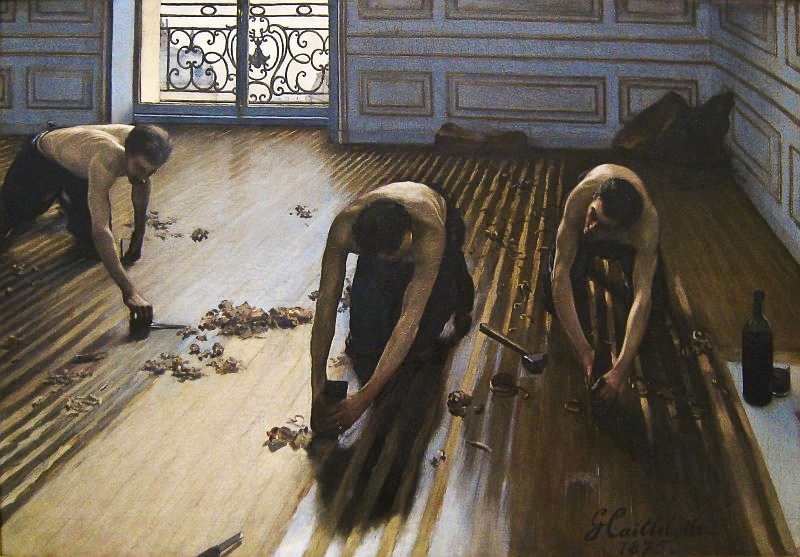 |
| The Floor Scrapers, Gustave Caillebotte (hosted by Wikipedia) |
I do think that a who's who right up front would have been a big help, particularly for readers who are perhaps less familiar with the Impressionist canon. If you're one of those, The Private Lives of the Impressionists will probably hold a good many "Wait, which one was Pissarro again?" moments. This is especially true once the various wives, sweethearts, mistresses, children, parents, and business associates come into the picture.
I might have liked Mad Enchantment more if I'd read this first, for background. More distantly, there's some crossover with David McCullough's The Greater Journey: Americans in Paris.
Tuesday, February 14, 2017
Book Review: Priceless
Priceless: How I Went Undercover to Rescue the World's Stolen Masterpieces
Robert Wittman
Art, crime
A quick read: breezily written, exciting, somewhat shallow, moderately informative, unapologetically subjective, and written (I feel sure) with one eye on a future TV or movie deal.
I'm tempted to compare Priceless to Bringing Down the House, except that Bringing Down the House is heavily fictionalized.
For actual fiction, Aaron and Charlotte Elkins have written two good series of art-crime mysteries. The Chris Norgren books (A Glancing Light, A Deceptive Clarity, and Old Scores) are straight mystery/thrillers. The more recent Alix London series (A Dangerous Talent, A Cruise to Die For, The Art Whisperer, and The Trouble With Mirrors) edge over toward the "romantic suspense" category.
Wednesday, November 30, 2016
Book Review: Mad Enchantment
Mad Enchantment: Claude Monet and the Painting of the Water Lilies
Ross King
Art, Biography, History
Ross King has written several lovely books. His best-known is Brunelleschi's Dome, which beautifully mixes art and architecture and politics and late-medieval history. I also liked The Judgment of Paris, chronicling the birth of Impressionism through the vitae parallelae of Ernest Meissonier (then famous, now obscure) and Edouard Manet (then obscure, now famous).
Mad Enchantment doesn't rise to that level. King's writing isn't the problem; it's his choice of subject matter. Justly famous though the Water Lilies series is, the story around it isn't really all that remarkable. In particular, a big chunk of Mad Enchantment involves the years-long negotiations surrounding Monet's donation of an indeterminate number of paintings to France. The unfortunate fact is that bureaucratic wrangling--however artistic the domain--is just not dramatic.
As Tracy Kidder has observed, "the techniques of fiction never belonged exclusively to fiction." The best parts of Mad Enchantment involve Monet himself: his tantrums, his fits of furious energy, his personal tragedies, his life at Giverny, and most especially his friendship with Georges Clemenceau (who was Prime Minster of France during World War I, among other things). Those parts make a story. The remainder. . . eh.
Monday, November 28, 2016
Only Five Four Months Until Opening Day


Monday, November 7, 2016
Book Review: Of Arms and Artists
Of Arms and Artists: The American Revolution Through Painters' Eyes
Paul Staiti
Art, biography, history
Paul Staiti has an interesting idea. He wants to talk about the uses and meanings of art in a time of revolution. He doesn't completely pull it off, but it's a worthwhile try.
The biggest problem with Of Arms and Artists is that it's kind of all over the map structure-wise. It's sort of chronological, but not exactly. It sort of examines each artist in turn, but skips around a lot (somewhat inevitably, since the artists in question lived interconnected lives). It's thematic in places, but not consistently; the themes--art-as-propaganda, art-as-documentation, art-as-mythmaking, art-as-politics, art-as-history--surface and disappear and resurface.
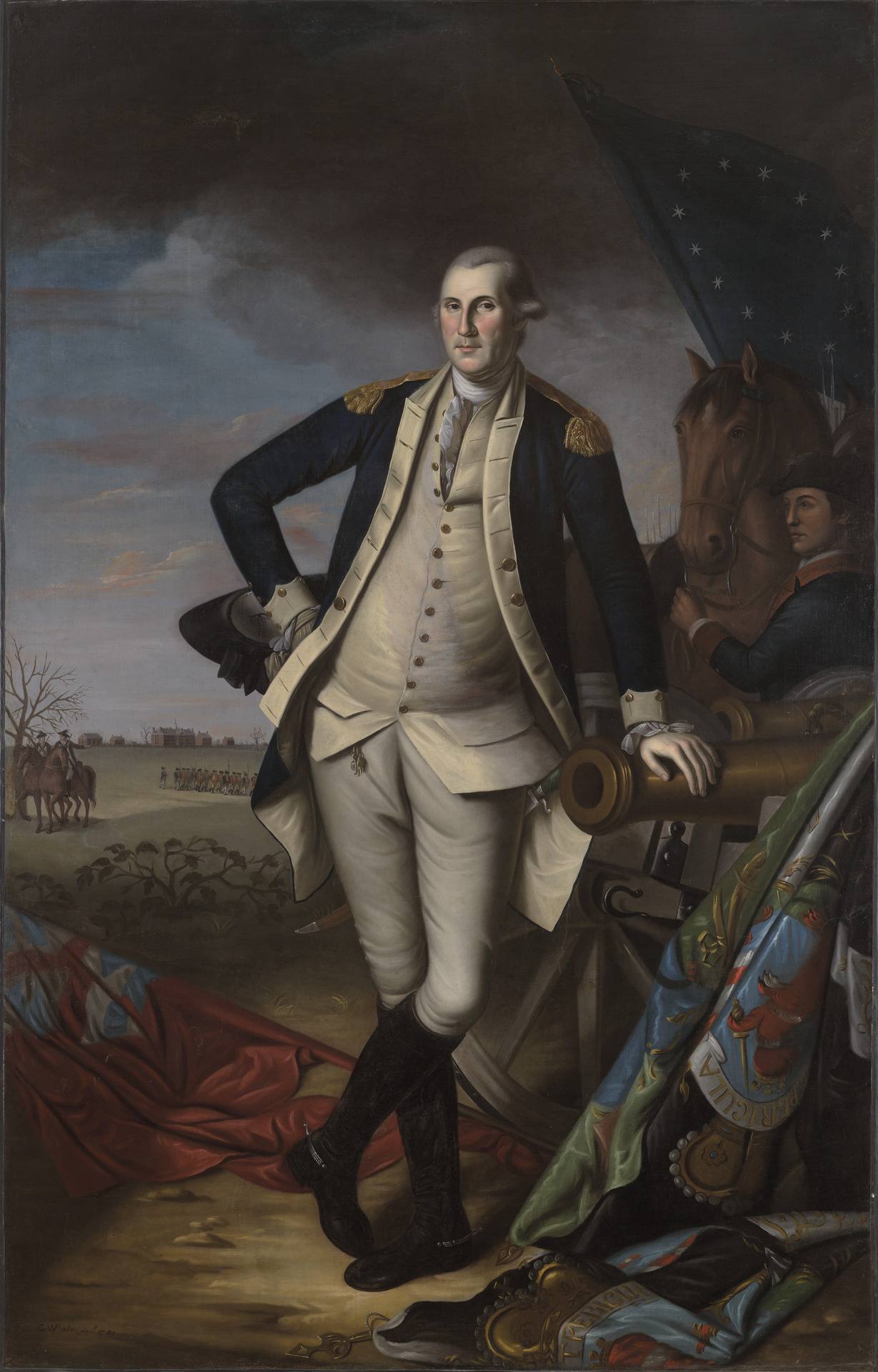
All the same, these are pretty interesting notions. In an age before photography, a portrait of George Washington would never convey a message as simple as "This is what General Washington looks like." Every portrait, every history painting, every genre painting, was not just an image but an attempt to influence. Staiti is at his best when he's decoding the messages in the paintings. There are often a great many levels of meaning, and some of them are largely lost to a modern viewer.
Also, the art itself is wonderful. Look at the confident glow in John Singleton Copley's portrait of Elkanah Watson, as America's independence is confirmed:
 Or Washington's cool, crossed-legged insouciance in Charles Willson Peale's portrait:
 It's hard to go too far wrong with this kind of source material.
An odd little book that covers some related territory from a different angle is The Painter's Chair: George Washington and the Making of American Art.
Paul Staiti
Art, biography, history
Paul Staiti has an interesting idea. He wants to talk about the uses and meanings of art in a time of revolution. He doesn't completely pull it off, but it's a worthwhile try.
The biggest problem with Of Arms and Artists is that it's kind of all over the map structure-wise. It's sort of chronological, but not exactly. It sort of examines each artist in turn, but skips around a lot (somewhat inevitably, since the artists in question lived interconnected lives). It's thematic in places, but not consistently; the themes--art-as-propaganda, art-as-documentation, art-as-mythmaking, art-as-politics, art-as-history--surface and disappear and resurface.
All the same, these are pretty interesting notions. In an age before photography, a portrait of George Washington would never convey a message as simple as "This is what General Washington looks like." Every portrait, every history painting, every genre painting, was not just an image but an attempt to influence. Staiti is at his best when he's decoding the messages in the paintings. There are often a great many levels of meaning, and some of them are largely lost to a modern viewer.
Also, the art itself is wonderful. Look at the confident glow in John Singleton Copley's portrait of Elkanah Watson, as America's independence is confirmed:
An odd little book that covers some related territory from a different angle is The Painter's Chair: George Washington and the Making of American Art.
Sunday, May 15, 2016
Book Review: Light
Light: A Radiant History From the Creation to the Quantum Age
Bruce Watson
Science, art
Critics and academics love this sort of book. Light is beautifully written. It crosses and recrosses the boundaries among science and art and culture, bringing together a diverse set of viewpoints on this one thing: light.
I liked Light very much. (It's hard for me not to like a book that prominently acknowledges my home town's library in the end credits.) I did not, however, love it. The danger in this kind of writing is that can end up as more performance piece than communication, and Bruce Watson does not entirely avoid this danger. The art and science halves of the book are largely separate; the cross-cultural survey is fitful and rather shallow.
More irritatingly, the science is sometimes poorly explained. The description of Isaac Newton's experimentum crucis (showing that white light is a mix of colors) is at best incomplete, and Watson's handling of polarization is just muddled. I'll give him a pass on his explanation of Heisenberg's uncertainty principle, since even physics books get that one wrong.
In sum, Light succeeds brilliantly at being entertaining. It's less brilliant at being informative, perhaps. Still, it's an elegant conceit--the art-history bits in particular are, well, illuminating--and it is, as previously noted, quite poetic. Enjoy the performance; double-check the facts.
One of my favorite books of 2015 was Laura J. Snyder's Eye of the Beholder--similar in some ways, but more tightly focused. ("Focused" ... light analogies are really hard to get away from, which is part of Bruce Watson's point.)
Monday, December 28, 2015
Book Review: Ivory Vikings
Ivory Vikings: The Mystery of the Most Famous Chessmen in the World and the Woman Who Made Them
Nancy Marie Brown
Art, archaeology
This is a frustrating book about the Lewis Chessmen. It has some really good good parts, and it has some really disappointing not-so-good parts.

Brown wants to assert that a woman known as Margaret the Adroit ("the most skilled carver in Iceland", according to an Icelandic family saga) created the Lewis chessmen for the 12th-century bishop Pall Jonsson. To get there, however, she has to make a series of assumptions, many of which are unstated. To detail only the grossest level: if the chessmen came from Iceland, and if they would have been considered a work of unusual skill, and if they were made for Bishop Pall, then it is plausible that Margaret made them. That's a lot of ifs for a person whose entire documented existence consists of a sentence or two. Some of the reasoning is decidedly dodgy, along the lines of what historical person X "would have said" or "would have thought". I can't help but suspect that Brown started with the conclusion, and then worked backward.
(Also: an author who chooses to put as her biographical blurb the facts that she speaks Icelandic and lives in Vermont with four Icelandic horses does nothing to dispel my impression of a deep and perhaps non-dispassionate connection to the subject. I freely admit that this is blatant stereotyping and unjustifiable speculation on my part.)
Then, too, Brown is not a master of factual organization. She has a clever approach--each chapter is named for a chess piece, and she uses that piece to explore the social history and position of both the piece and its real-world counterpart. Unfortunately, in doing this, she is forced away from a chronological approach. That's not necessarily bad, but Brown doesn't pull it off; she darts back and forward in time, with similarly-named actors doing similar things in different chapters, and loses the thread repeatedly.
On the other hand, the Icelandic-origin theory seems (at least according to Ivory Vikings) to have been unfairly pooh-poohed by scholars. The competing origin fables--Norway is the most popular--are also highly speculative. More importantly, Iceland wasn't some provincial backwater, but a wealthy and flourishing (if hard and remote) society. So Brown at least deserves credit for establishing that "plausible" thing.
But where she truly excels is in evoking the lost, strange, brutal, evocative, beautiful Northern world. And it truly was a world--an economic and cultural continuum spanning from Greenland into Russia, not long past the paganism of Thor and Odin, where trading and raiding coexisted for centuries: a place in the medieval European orbit, but fully not of it. There are stories here to conjure with, and names as well: Erlang Skew-Neck, King Magnus III Barelegs, Unn the Deep-Minded, Harold Hard-ruler, Ketil Flat-Nose. There are intrepid venturers in "white gold", walrus ivory. There are feuds and betrayals and ironic humor. In the best parts of Ivory Vikings, Braun dives deep into both the facts and the stories of the North, with particularly good scholarship on the Icelandic sagas.
I don't know that I'd be in a rush to read another non-fiction book by Nancy Marie Brown. On the other hand, if she ever publishes any translations of those sagas, I'm there.
Thursday, December 17, 2015
Book Review: The White Road
The White Road: Journey Into an Obsession
Edmund de Waal
Biography, art
A couple of years ago a ceramic artist named Edward de Waal wrote a book called The Hare With Amber Eyes. In it he used the titular netsuke figurine as a framing device for an evocative and moving history of his family. It's an absorbing book about loss and recovery, the ephemeral and the permanent.

The White Road is less successful. De Waal doesn't seem to understand what the book is about. Is it a single-subject history of porcelain? Is it a personal memoir? Is it a poetic meditation on Art? Is it a travelogue? It partakes of all of these things, but not fully enough to be any of them. It fails as a history of the substance, to pick on the first aspect, by not providing enough facts about what porcelain is, how it differs chemically and physically from other forms of pottery, what the full history of it encompasses, etc. etc. etc.
That would be a very Enlightenment sort of book, by the way. De Waal's preoccupations seem to be more Romantic. In the first third of the book, he seems to be trying to share with the reader the subjective, inner experience of what it means to truly love this beautiful material--a quintessentially Romantic concern. It's not an unworthy ambition, but De Waal doesn't pull it off. He tries to be profound, but too often he's merely precious. (Pro tip: littering your text with one-sentence paragraphs robs the device of any force that it might have had.) Among other things, he's annoyingly fond to the pathetic fallacy.
The White Road is by no means a complete failure. There are eloquent passages, there are interesting biographical anecdotes, there are informative facts. It's just that there aren't enough of any one of them to make a whole book out of.
Edmund de Waal
Biography, art
A couple of years ago a ceramic artist named Edward de Waal wrote a book called The Hare With Amber Eyes. In it he used the titular netsuke figurine as a framing device for an evocative and moving history of his family. It's an absorbing book about loss and recovery, the ephemeral and the permanent.
The White Road is less successful. De Waal doesn't seem to understand what the book is about. Is it a single-subject history of porcelain? Is it a personal memoir? Is it a poetic meditation on Art? Is it a travelogue? It partakes of all of these things, but not fully enough to be any of them. It fails as a history of the substance, to pick on the first aspect, by not providing enough facts about what porcelain is, how it differs chemically and physically from other forms of pottery, what the full history of it encompasses, etc. etc. etc.
That would be a very Enlightenment sort of book, by the way. De Waal's preoccupations seem to be more Romantic. In the first third of the book, he seems to be trying to share with the reader the subjective, inner experience of what it means to truly love this beautiful material--a quintessentially Romantic concern. It's not an unworthy ambition, but De Waal doesn't pull it off. He tries to be profound, but too often he's merely precious. (Pro tip: littering your text with one-sentence paragraphs robs the device of any force that it might have had.) Among other things, he's annoyingly fond to the pathetic fallacy.
The White Road is by no means a complete failure. There are eloquent passages, there are interesting biographical anecdotes, there are informative facts. It's just that there aren't enough of any one of them to make a whole book out of.
Tuesday, October 27, 2015
Book Review: The Art of the Con
The Art of the Con: The Most Notorious Fakes, Frauds, and Forgeries in the Art World
Anthony M. Amore
Crime, art
It's tempting to call art forging the perfect victimless crime. Nobody is forced to buy paintings, and most of the victims have more money than is good for them anyway. Nor can you argue, in one sense, that you're not getting what you pay for. The painting looks, after all, the same regardless of who painted it. If you're buying it because you like it, that should be enough. And if you're buying it as an investment, and you don't do your homework, it's nobody's fault but yours if it turns out to be bogus.
Finally, most art forgers concentrate on faking modern art--because it's dead easy; you don't need any skill--so who cares? (Thought question: if nobody can tell a "priceless" Mark Rothko original from a replica slapped together by an underpaid Chinese immigrant working in a warehouse in Queens, what does that say about the art?)
On the other hand, the art forgers themselves seem to be genuinely awful people. The word "sociopath" is overused these days, but the character portraits in The Art of the Con show narcissists and Machiavellian personalities run amok. These are not twinkly-eyed rogues, although they're sometimes portrayed that way. These are people who, quite clearly, genuinely feel that the only crime is to get caught.
So much for musings. As to the book itself, it's zippily written, not especially deep, good on quick character portraits, weak on the art itself, and without pretenses to completeness or analysis. If you think the subject matter sounds interesting, you'll probably enjoy this book.
The Man Who Made Vermeers, by Jonathan Lopez, is an excellent book on the forger Han van Meegeren, who definitely fit the narcissist profile.
Saturday, June 13, 2015
Book Review/Essay: Rendez-vous With Art and the Rationalist Temperament
Rendez-vous With Art
Philippe de Montebello, Martin Gayford
Art
A couple of men who really, really love Art go to museums and talk about what they see. Much dialogue ensues.
For me, Rendez-vous With Art is as much a sociological investigation as an artistic one. Now, I'm not a total philistine. I sometimes visit art museums voluntarily. I myself have committed acts of art, and even been paid for them. There are painters I admire greatly (Vermeer, Hopper) and painters I despise (Jackson Pollock, Roy Lichtenstein).
But I do not--I probably cannot--feel about art the way de Montebello and Gayford feel about Art.
I've never stood before a painting and felt ravished. I've never had the feeling that "this must be the best painting ever".
Perhaps this is another divide between the Romantic and the Enlightenment temperaments. For example, at one point, Philippe de Montebello says:
I would be willing to bet a moderate amount of money that the answer to the last question is no, by the way. Many studies have shown that people, including wine experts, can't tell the difference in blind testing between cheap wines and expensive ones--but when you tell them a wine is more expensive (even if it's not!) they enjoy it more.
Here's another example. De Montebello looks at this Assyrian relief (which, by the way, I agree is marvelous):

His reaction:
Perhaps these kinds of reactions are why I--like other engineers of my acquaintance--often prefer illustration to art. The distinction is artificial, and relatively recent, but I think it's a useful one. (I've done both.) Art, as it's currently understood, is an interior and subjective experience, and as such it's exceedingly vulnerable to group-think and critical faddism. Illustration is intended to give a clear, evocative picture. The ideal illustration is one that can be enjoyed by anyone, and will get a fairly consistent response across most viewers.
N. C. Wyeth, for example, was an illustrator, particularly beloved for his adventure book paintings. His wonderful pirate illustrations literally created the iconic "pirate look":

This is a terrific illustration. It's all surface--what you see is what it is--but what a wonderful surface it is!
His son Andrew Wyeth was an artist. His most famous painting is Christina's World:

Christina's World is intended as art. It leaves everything to the imagination of the viewer. We're free to project ourselves into the picture and react individually.
Nowadays illustration is considered rather coarse and lowbrow; "fine" art gets all the respect. Perhaps I'm limited by my Enlightenment-oriented, engineering-trained mind, but I can't help thinking that this attitude sells the illustrators short. To show a thing clearly, and show it in a way that it's not only beautiful but becomes more real than the reality, is no small matter.
Philippe de Montebello, Martin Gayford
Art
A couple of men who really, really love Art go to museums and talk about what they see. Much dialogue ensues.
For me, Rendez-vous With Art is as much a sociological investigation as an artistic one. Now, I'm not a total philistine. I sometimes visit art museums voluntarily. I myself have committed acts of art, and even been paid for them. There are painters I admire greatly (Vermeer, Hopper) and painters I despise (Jackson Pollock, Roy Lichtenstein).
But I do not--I probably cannot--feel about art the way de Montebello and Gayford feel about Art.
I've never stood before a painting and felt ravished. I've never had the feeling that "this must be the best painting ever".
Perhaps this is another divide between the Romantic and the Enlightenment temperaments. For example, at one point, Philippe de Montebello says:
There are may things to enjoy and ravish the eye in the works of Caravaggio's finest followers, but the image that will remain engraved in your memory, the picture that has shaken you, changed you, and that you will not forget, will be by Caravaggio.To which I immediately think: really? Have double-blind studies been done? If so, who was the control group, and what was the level of statistical significance achieved? And ... are you certain that that would be your reaction if you didn't know which picture was a genuine Caravaggio?
I would be willing to bet a moderate amount of money that the answer to the last question is no, by the way. Many studies have shown that people, including wine experts, can't tell the difference in blind testing between cheap wines and expensive ones--but when you tell them a wine is more expensive (even if it's not!) they enjoy it more.
Here's another example. De Montebello looks at this Assyrian relief (which, by the way, I agree is marvelous):
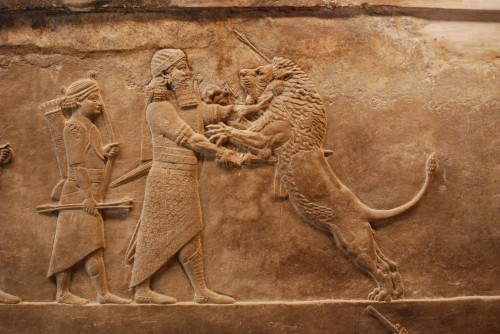
(Image hosted at the Ancient History Encyclopedia)
His reaction:
The king is impassive, invincible ... The king has to be represented in a hieratic, predetermined and specific way ...My reaction: drawing people in lifelike action poses is hard (I know by personal experience). I bet it's a lot harder when you're working stone with early-Iron-Age tools. Maybe the king looks stiff because the artist had hit the limits of his skill.
Perhaps these kinds of reactions are why I--like other engineers of my acquaintance--often prefer illustration to art. The distinction is artificial, and relatively recent, but I think it's a useful one. (I've done both.) Art, as it's currently understood, is an interior and subjective experience, and as such it's exceedingly vulnerable to group-think and critical faddism. Illustration is intended to give a clear, evocative picture. The ideal illustration is one that can be enjoyed by anyone, and will get a fairly consistent response across most viewers.
N. C. Wyeth, for example, was an illustrator, particularly beloved for his adventure book paintings. His wonderful pirate illustrations literally created the iconic "pirate look":

This is a terrific illustration. It's all surface--what you see is what it is--but what a wonderful surface it is!
His son Andrew Wyeth was an artist. His most famous painting is Christina's World:

(Image hosted by the Museum of Modern Art)
Christina's World is intended as art. It leaves everything to the imagination of the viewer. We're free to project ourselves into the picture and react individually.
Nowadays illustration is considered rather coarse and lowbrow; "fine" art gets all the respect. Perhaps I'm limited by my Enlightenment-oriented, engineering-trained mind, but I can't help thinking that this attitude sells the illustrators short. To show a thing clearly, and show it in a way that it's not only beautiful but becomes more real than the reality, is no small matter.
Sunday, May 3, 2015
Book Review: The Boston Raphael
The Boston Raphael: A Mysterious Painting, an Embattled Museum in an Era of Change, and a Daughter's Search for the Truth
Belinda Rathbone
Art
This is a fairly good book about a fairly bad painting.

The Boston Museum of Fine Arts bought this painting, around 1969, under the impression that it was by Raphael. And yet, look at it ...
Belinda Rathbone
Art
This is a fairly good book about a fairly bad painting.
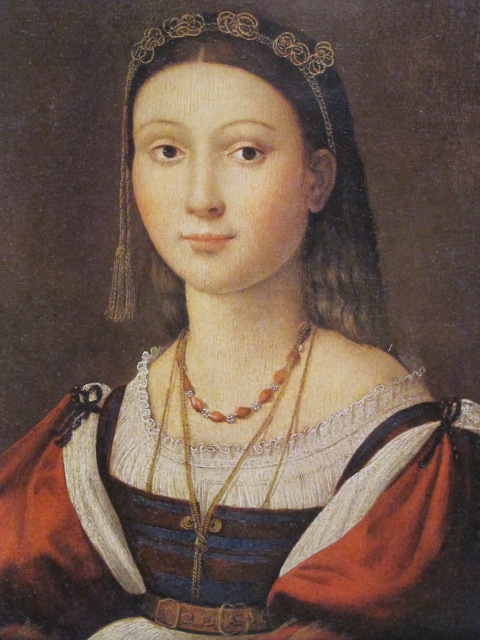
Image hosted at Art New England
The Boston Museum of Fine Arts bought this painting, around 1969, under the impression that it was by Raphael. And yet, look at it ...
- The right side of the subject's face (left, if you're looking at the painting) is drawn as if it's facing flat forward. There's almost no shading to indicate the rounding of the cheek, the shape of the eye isn't in perspective, and there's too much space between the outer corner of the eye and the edge of face.
- Even allowing for the conventions of Renaissance beauty, the neck is absurdly elongated.
- The irises of the eyes don't even line up on the same horizontal plane. The right eye is looking very slightly up, giving the portrait a subtly cockeyed look.
The answers have to do with museums, and what their role is, and how that role was changing in the tumult of the 1960s and 1970s. Nowadays we're familiar with the idea that museums host "blockbuster exhibitions," usually with corporate sponsorship. That wasn't always so. In the old days, they operated more like clubby little familial enterprises. The right sort of people could go and survey a collection of certified Good Art and feel satisfied about being cultured, while hoi polloi were permitted to wander in and better themselves.
The strongest parts of The Boston Raphael are about this phase transition. Boston's high society before the 1960s was extraordinarily insulated--I'm tempted to say "inbred". The Museum's high-profile director, Perry Rathbone, was a major part of the seismic shift away from that culture, and his acquisition of the so-called Raphael was par for the course.
The weakest part of The Boston Raphael, contrarily, is that it doesn't know what it wants to be when it grows up. Author Belinda Rathbone is Perry Rathbone's daughter, so this could have been a deeply personal account of how the blowup over the painting affected her family . . . and there's a little of that, but not much. Or it could have been the story of Rathbone himself and his rise into the privileged classes--and there's some of that, too, but it isn't sustained. There's a lot of detail--too much; we're talking a memo-by-memo instant replay here--about the battles between Rathbone and the explicitly corporate George Seybolt for control of the MFA's administration. There's a thread about the Italian attempt to reclaim the painting, coupled with a rather dry legal question about whether it was properly declared at U.S. customs.
And then there's the story of the painting itself, which is vexatiously incomplete--almost to the point of being an afterthought. Which is a pity, because the whole book begs the questions I started with: why? Is this painting automatically made worthy by virtue of being a Raphael? If it turns out that it isn't a Raphael, does that automatically make it unworthy? What, fundamentally, makes a piece of art worth spending a lot of money on, or going to a museum for, or fighting for possession of? The Boston Raphael isn't a bad book, but it doesn't really come down to brass tacks on these questions, or really on anything else.
Crossover reading:
- A secondary character in The Boston Raphael is Thomas Hoving, who ran the Metropolitan Museum in New York. His memoir Making the Mummies Dance is unreliable, gossipy, name-dropping, opinionated, and quite entertaining.
- The American Leonardo by John Brewer covers some similar territory about art and connoisseurship, but it's badly flawed by virtue of its poor structure.
Thursday, April 2, 2015
Book Review: Eye of the Beholder
Eye of the Beholder: Johannes Vermeer, Antoni van Leeuwenhoek, and the Reinvention of Seeing
Laura J. Snyder
Art, optics
Johannes Vermeer was a master of Dutch genre painting. Antoni van Leeuwenhoek was a pioneering microscopist, the first to observe single-celled organisms. I'd known a fair amount about each of these men individually--though more about Leeuwenhoek--before I picked up Eye of the Beholder.
I had not registered that they lived in the same city (Delft) at the same time (they were baptized a week apart) in houses that were a minute's walk from each other, and had a number of mutual friends. Given the relatively small size of the city, and the two men's similar social standing, it's hard to imagine that they weren't at least acquaintances. It turns out that Leeuwenhoek was even appointed to execute Vermeer's will.
That's the first of many connections that Laura Snyder talks about, but it's hardly the most interesting part of this extraordinary and thought-provoking book. Snyder's thesis is that both men were working at the edge of a new way of seeing, using both the emerging science of optics and the new thinking of the early Enlightenment.
Take Vermeer first. He was far from the only painter of Dutch interiors, but he was perhaps the sharpest observer. He and his fellows differed from the Italian school of painting in that the Italian Old Masters tended to produce what I might call interpreted paintings--art that was meant to tell or illustrate a story (often religious or mythological), or to produce a moral lesson, or serve as an allegory. To fully understand these paintings, you sort of have to follow the artist's thoughts.
By contrast, consider Vermeer's The Geographer--the model for which, quite a few scholars think, may have been Leeuwenhoek himself:
 Who is this man? Has he just been struck by a thought? He's deeply engaged in something, but in what? Vermeer doesn't tell us. He just gives us the moment, accompanied by a near-photographic level of detail. The painting isn't interpreted, but observed.*
The distinction becomes critical when we think about the then-brand-new science of microbiology. Even today, science struggles against narrative. We humans have an instinct to see, not what's there, but what we expect. In the Middle Ages and Renaissance, that was considered a feature rather than a bug. In the Scholastic tradition, to generalize wildly, phenomena were observed in order to confirm what the observer already knew (meaning, in this case, the medieval understanding of Aristotle). Galileo saw mountains on the moon; other viewers saw them as clouds, or reflections; still others--so Galileo complained--refused to look through his telescope at all.
Leeuwenhoek is called the Father of Microbiology not only because he built good microscopes, and not only because he was exceptionally skilled and diligent in using them, but because he too observed. He saw what was there, and he didn't see what wasn't there.
The above is only the briefest, barest synopsis of the ideas in this dense yet fascinating book. Some of them are speculative: Snyder subscribes to the somewhat-controversial idea that Vermeer made use of lenses, mirrors, and the camera obscura. Others are perhaps more strongly presented than the evidence warrants. These, however, are nits to pick. Overall, Eye of the Beholder is that rare and excellent book that does the thing it describes: it takes something familiar, and gives us a whole new way to look at it.
*And part of that observation prefigures the Impressionists. Examine the shadows in The Geographer above, and you'll see a whole range of tones. That's Vermeer working with how the eye perceives shade and light, which is not at all the way a camera does.↩
Laura J. Snyder
Art, optics
Johannes Vermeer was a master of Dutch genre painting. Antoni van Leeuwenhoek was a pioneering microscopist, the first to observe single-celled organisms. I'd known a fair amount about each of these men individually--though more about Leeuwenhoek--before I picked up Eye of the Beholder.
I had not registered that they lived in the same city (Delft) at the same time (they were baptized a week apart) in houses that were a minute's walk from each other, and had a number of mutual friends. Given the relatively small size of the city, and the two men's similar social standing, it's hard to imagine that they weren't at least acquaintances. It turns out that Leeuwenhoek was even appointed to execute Vermeer's will.
That's the first of many connections that Laura Snyder talks about, but it's hardly the most interesting part of this extraordinary and thought-provoking book. Snyder's thesis is that both men were working at the edge of a new way of seeing, using both the emerging science of optics and the new thinking of the early Enlightenment.
Take Vermeer first. He was far from the only painter of Dutch interiors, but he was perhaps the sharpest observer. He and his fellows differed from the Italian school of painting in that the Italian Old Masters tended to produce what I might call interpreted paintings--art that was meant to tell or illustrate a story (often religious or mythological), or to produce a moral lesson, or serve as an allegory. To fully understand these paintings, you sort of have to follow the artist's thoughts.
By contrast, consider Vermeer's The Geographer--the model for which, quite a few scholars think, may have been Leeuwenhoek himself:
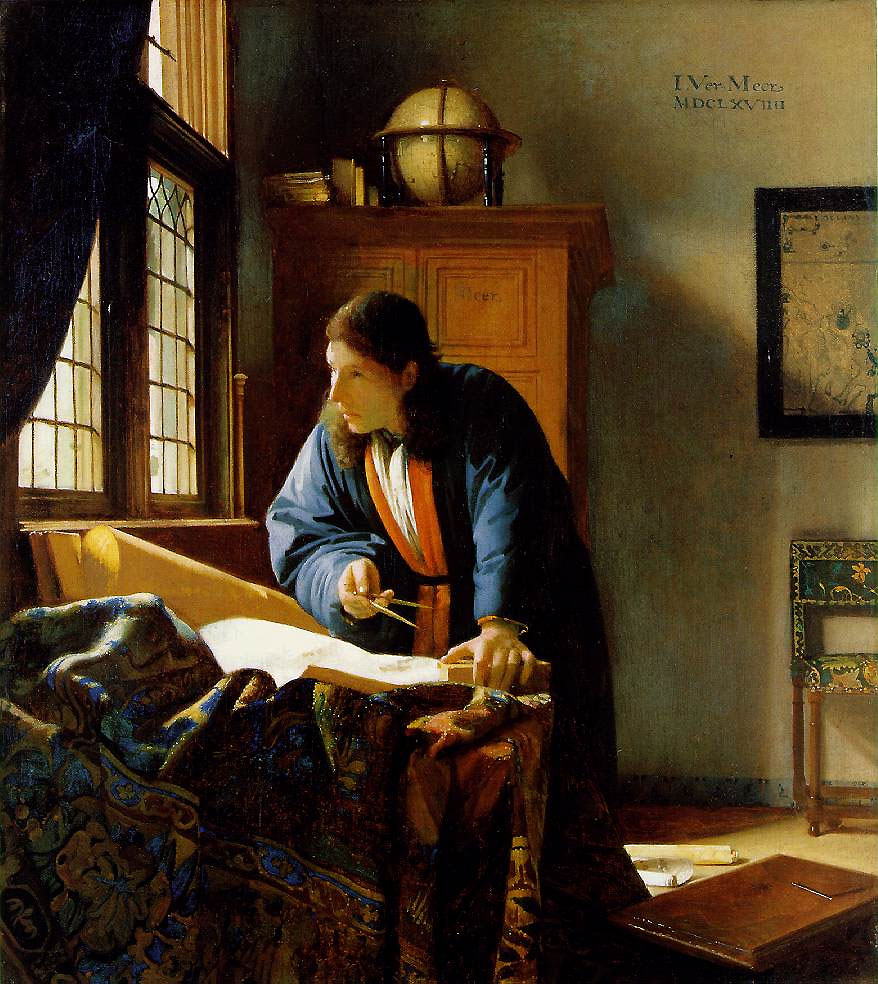
The distinction becomes critical when we think about the then-brand-new science of microbiology. Even today, science struggles against narrative. We humans have an instinct to see, not what's there, but what we expect. In the Middle Ages and Renaissance, that was considered a feature rather than a bug. In the Scholastic tradition, to generalize wildly, phenomena were observed in order to confirm what the observer already knew (meaning, in this case, the medieval understanding of Aristotle). Galileo saw mountains on the moon; other viewers saw them as clouds, or reflections; still others--so Galileo complained--refused to look through his telescope at all.
Leeuwenhoek is called the Father of Microbiology not only because he built good microscopes, and not only because he was exceptionally skilled and diligent in using them, but because he too observed. He saw what was there, and he didn't see what wasn't there.
The above is only the briefest, barest synopsis of the ideas in this dense yet fascinating book. Some of them are speculative: Snyder subscribes to the somewhat-controversial idea that Vermeer made use of lenses, mirrors, and the camera obscura. Others are perhaps more strongly presented than the evidence warrants. These, however, are nits to pick. Overall, Eye of the Beholder is that rare and excellent book that does the thing it describes: it takes something familiar, and gives us a whole new way to look at it.
*And part of that observation prefigures the Impressionists. Examine the shadows in The Geographer above, and you'll see a whole range of tones. That's Vermeer working with how the eye perceives shade and light, which is not at all the way a camera does.↩
Subscribe to:
Posts (Atom)