A Mind a Play: How Claude Shannon Invented the Information Age
Jimmy Soni, Rob Goodman
Biography, computers
Claude Shannon was the Isaac Newton of information theory--and that's not an exaggeration; he reified and measured the concept of "information" much as Newton made sense of force and acceleration. Unlike Newton, he seems to have been a genuinely playful and sweet-natured man. After revolutionizing communication, he rode unicycles, taught himself to juggle, and built whimsical machines--like the box with the switch on top; when the switch was turned on, a mechanical arm emerged, turned off the switch, and retracted.
A Mind at Play is not a super-dense book, either as biology or as mathematics. Its core is a very nice summary, very light on mathematics, of just what it was that Shannon did. I think the authors missed a couple of tricks for the more knowledgeable reader--the deep connections between information entropy and physical entropy go unacknowledged--but the book is well-written and provides a good, sympathetic character portrait.
Among the good books that overlap with A Mind at Play are:
- The Innovators, Walter Isaacson
- The Idea Factory, Jon Gertner
- The Information, James Gleick (much more technically rich)
A Death by Any Other Name
Tessa Arlen
Mystery
I sometimes feel as though I ought to give new authors a chance, and not just stick to my old favorites. In this case, I was swayed by the back-cover quote: "pitch-perfect classic whodunit."
I should have remembered the rules.
A Death by Any Other Name is just plain badly written. It's not entirely Tessa Arlen's fault; there are a lot of problems that would have been caught by any competent copy editor. Consider:
- "Fraulein" is several times misspelled as "Frauline."
- A chafing dish is used to warm food. A chaffing dish, if there were such a thing, would have to either convert food to inedible husks, mock it in a good-natured fashion, or confuse its radar.
- One character--an educated man--says that France has been England's foe "since time in memoriam". The phrase Arlen is looking for is "since time immemorial."
- Only other servants would have referred to the butler as "Mr. Evans." The family and guests would have called him "Evans."
Then there's the wooden dialogue. This is supposed to be a man speaking with "simple conviction", having forgotten his "showy manner":
She brought refinement to the dishes she prepared that far outshone anything I have had from French chefs in more prestigious establishments.
Try saying that out loud and sounding natural. There are plenty of other solecisms as well--run-on sentences, misused commas, paragraphs that have unattributed dialog from two different characters, and an implacable devotion to telling what the characters are feeling rather than showing. Nor does Arlen understand that the "action" of a whodunit takes the form of "information is revealed" (either to obscure or to enlighten), so the pacing is nonexistent too.
At this point, one of my regular readers is already mouthing the question: "So why did you keep reading it, then?" The answer is that I still hoped that A Death by Any Other Name might prove to be interesting as a whodunit--that is, as a puzzle, a technical challenge, an ingenious piece of misdirection. Alas, I was disappointed in this as well. The whole of the deductive process displayed boils down to this (SPOILER, if anyone cares):
- This piece of paper, which we found quite by accident, has a 7 written in the continental fashion, with a bar through it:
7.
- X is French.
- Therefore, X is the murderer!
Not only is this feeble, it's not even original.
I'm not happy to have to pan this book. It's the kind of thing I'd like to like, and the publisher is one I'd like to support. But the author didn't do her job, and the editor didn't do theirs.
My usual suspects for whodunits are Steve Hockensmith, Aaron and Charlotte Elkins, and sometimes Anthony Horowitz. If you find any others, let me know.
Empire of Things: How We Became a World of Consumers, from the Fifteenth Century to the Twenty-First
Frank Trentmann
Sociology, economics
At the end of Empire of Things you'll find 107 pages of densely-packed, small-print end notes. You'll also find an apologetic note from the author:
. . . these are only the tip of the research iceberg on which this book rests. Readers who wish to delve deeper . . .can browse my 260-page working bibliography at: http://www.bbk.ac.uk/frank-trentmann/empire-of-things/.
This, mind you, after 692 pages of text. These aren't light, fluffy pages, either. It's like you're walking into Dr. Trentmann's Famous Museum of Consumer Facts. Imagine a long room, lined with glass cases, each of which is crammed with exhibits, and where each exhibit has an explanatory plaque which you're expected to read. A semi-random trawl through the book's first half furnishes some examples. Page 175:
In 1800, Paris and London made do with a few thousand oil lamps . . . By 1867 . . . Paris was lit by around 20,0000 gas lamps. By 1907, it had 54,000; London had as many as 77,000 lights . . . each burnt 140 litres of gas a night. When the First World War broke out in 1914, Paris was seventy times brighter than during the 1848 revolution.
Page 212:
A typical local Varieté cinema in 1904 showed moving pictures to around 70,000 viewers a week . . . Lexington, Kentucky had two cinemas for its 25,000 inhabitants . . . By 1914, Britain had 3,800 cinemas. London alone had almost five hundred, with seating for 400,000, more than five times that in music halls . . . 250,000 Londoners went to the cinema, every day. In New York City, the weekly attendance was closer to a million . . .
Page 239:
. . . a factory worker typically earned $590 in 1890 . . . almost a million new homes were constructed in 1925 alone . . . In New York and Philadelphia, 87 per cent and 61 per cent were renting in 1920. In 1930, this was down to 80 per cent and 42 per cent.
Page 326-327:
. . . in the early 1960s, public expenditure was 36 per cent of GDP in France (33 per cent in the UK; 35 per cent in West Germany); by the late 1970s it had reached 46 per cent in all three . . . In the USSR, consumer durables grew at a rate of 8 per cent a year . . . the Hungarian government promised its people 610,000 TVs, 600,000 washing machines and 128,000 fridges within the next three years . . .
It's not that the facts aren't interesting; they are. It's not that Empire of Things is badly written, either, although someone should let Frank Trentmann know that it's no longer a flogging offense to use a contraction now and then. It's just that there's so . . . damn . . . much of it. Even the most dedicated reader isn't going to retain more than a tiny fraction of this information. Empire of Things would have been so much more memorable if it had only concentrated on telling a story. (The second half, which is organized by concept rather than chronologically, is a bit better than the first.) But if there's a theme running through the book, it's one that only really becomes clear in the final 20 pages or so. The book is intriguing in spots, and enlightening in spots, but as a whole it's something of a blur.
The Red Thumb Mark
R. Austin Freeman
Mystery
Another old-school classic, of sorts, found at the Seattle Mystery Bookshop. The Red Thumb Mark (1907) is the first of Freeman's "Dr. Thorndyke" series. Freeman was very well-known and well-regarded back in the Golden Age of Mystery; he has a fair claim to have invented the scientific-legal thriller, in which the detective uses genuine scientific or technical knowledge to identify the criminal.
On that level I have no quarrels with The Red Thumb Mark. The science is detailed, well-explained, and (as far as I can judge) sound. The expository dialog is a little stiff, but it's not bad for all that. The trial scenes are entertaining, too.
When Freeman is writing about anything other than science or law, though, his prose takes on a distinctly mauve shade. It's not quite purple, but . . . well, just look.
I glanced from time to time at my companion, and noted that her cheek still bore a rosy flush, and when she looked at me, there was a sparkle in her eye, and a smiling softness in her glance, that stirred my heart until I trembled with the intensity of the passion that I must needs conceal. And while I was feeling that I must tell her all, and have done with it, tell her that I was her abject slave, and she my goddess, my queen; that in the face of such a love as mine, no man could have any claim upon her; even then, there arose the still, small voice that began to call me an unfaithful steward and to remind me of a duty and trust that were sacred even beyond love.
The actual dialogue I will spare you. On his worst day, Conan Doyle (to take one instance) could not possibly have written this stuff.
It must also be said that Jervis, the narrator, is phenomenally dim-witted, while Dr. Thorndyke himself is colorless and one-dimensional. O tempora! O mores! The prose of 1907 is not the prose of 2017. I fear that, unlike such distinguished contemporaries as The Hound of the Baskervilles (1901), The Red Thumb Mark must now be regarded mainly as a period piece.
The Dispatcher
John Scalzi
Science fiction
A novella rather than a novel, The Dispatcher is an intriguing concept executed with a kind of minimalism. There are some cool ideas here, but they're outlined rather than developed. It's heavy on dialogue, and the dialogue is somewhat less flagrantly Scalzi-esque than usual. I liked it. It's very much in the old-school SF mode. I kind of hope Scalzi develops the idea further, though.
The Crash Detectives: Investigating the World's Most Mysterious Air Disasters
Christine Negroni
Engineering, transportation
This book was a disappointment. In the first place, it's not about any actual crash detectives. Mainly it's a jumpy, incomplete, and speculative smorgasbord of miscellaneous air disaster stories, some of which don't even conclude. Furthermore, it's glib, it's shallow, and it indulges in after-the-fact finger-pointing. Finally, it spends way too much time expounding Christine Negroni's theory about Malaysia Airlines flight 370. (The theory itself--hypoxia--is reasonable enough.) Avoid, and avoid the author unless she gets a competent editor.
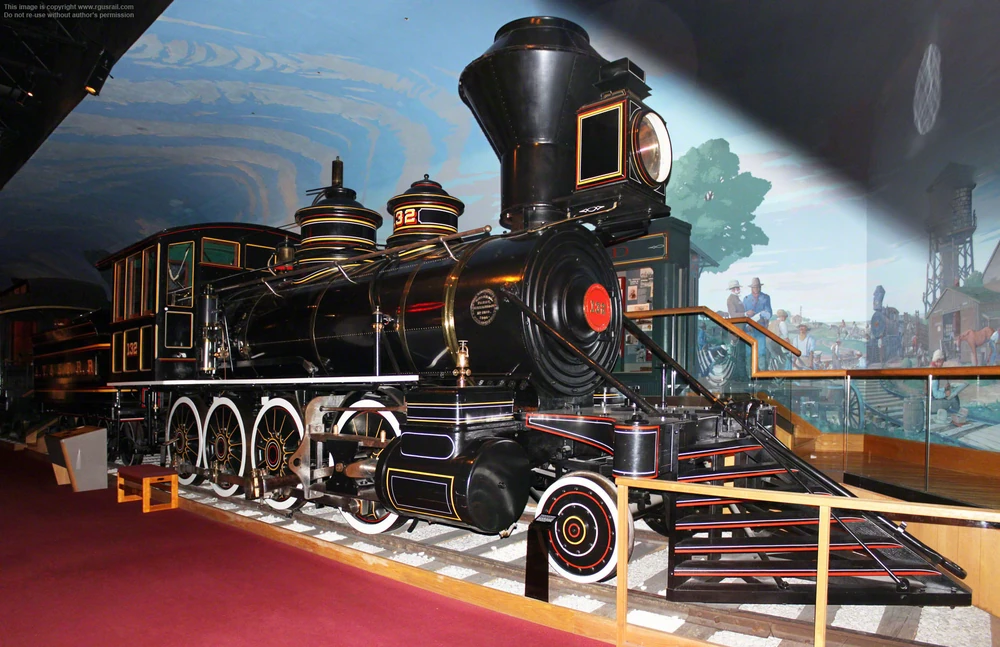
Iron Horses: America's Race to Bring the Railroads West
Walter R. Borneman
History, trains
Imagine reading a play-by-play recount of a sporting event--one of Roger Angell's classic baseball essays, for example. If you're totally uninterested in baseball, then even a really good account isn't going to flutter the cockles of your heart. If you're a fan, that's a different story.
So it is with Iron Horses. There's a brief introduction to the time and the place (the American Southwest, 1850 and after) and to some of the main characters. Then we're off. Here's Cyrus K. Holliday coming up for the plucky underdog Santa Fe ... and he's secured his federal grants! He's setting out for the state line, building track. And here comes the Kansas Pacific, pushing him from the north! Those grants come with a deadline! It's an epic race, folks, and let's not forget "General" Palmer and his Rio Grande system stirring around near Denver--
I liked Iron Horses a lot. It's fast-paced, lively, quite well-written, and does a fairly good job at handling a large cast of both men and railroads. It's got scope. It's got engineering and local color and finance and tycoons and a couple of actual, honest-to-god gunfights. It even has, just barely, enough maps.
But, then, to continue the sporting analogy, I'm already a fan. I have model trains in my basement and train pictures on my walls and a ton of history books upstairs. I'm not convinced that Iron Horses--good though it is!--would translate to the non-fan community. Borneman's writing for readers who have some idea of the geography and railroads of the West, who already know the difference between a 4-4-0 and a 2-8-0.
It's instructive to compare Iron Horses with Cattle Kingdom. They overlap in space and time. They're both nicely readable. They both have a major story arc with various offshoots. They both work well at the macro scale: politics, finance, rich guys, trends, and so forth. Cattle Kingdom does a better job in shifting to the micro scale, though--the scale of individuals working on the ground--and that gives it an extra measure of appeal. Iron Horses has, if anything, more in the way of conflict and competition; and yet, ultimately, its stars are railroads more than people.
There are two good books about the building of the first transcontinental railroad: Nothing Like It in the World (Stephen Ambrose) and Empire Express (David Haward Bain). Ambrose's book is very readable, but has been criticized on accuracy grounds.